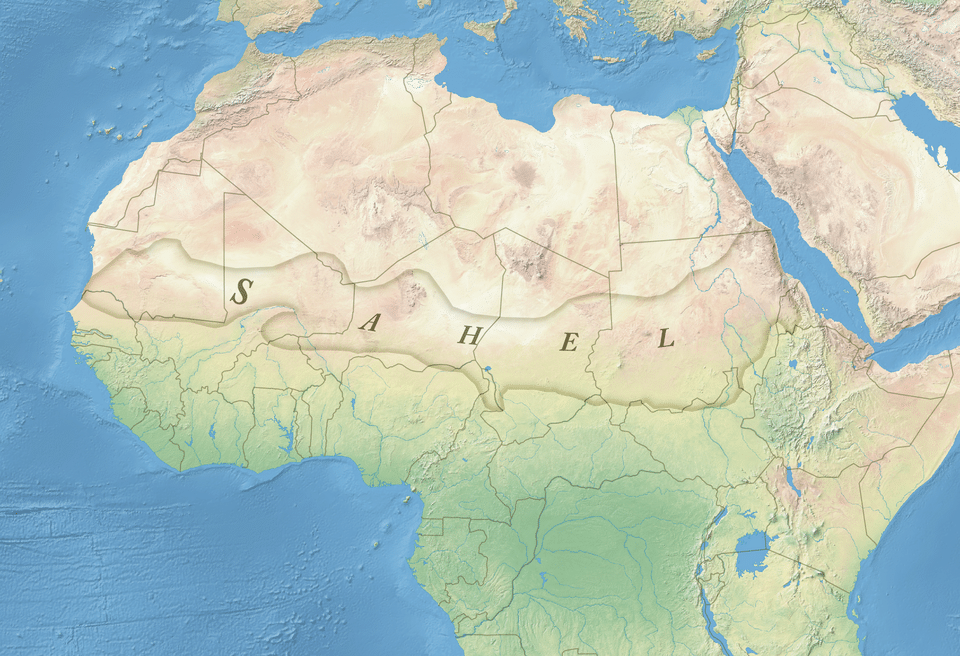
In the Sahel, jihadist groups are no longer seeking merely to conquer territory. According to a study published in September 2026 by the Institute for Strategic Research at the Military School (IRSEM), the Group for the Support of Islam and Muslims (JNIM) is developing parallel forms of governance and exerting growing pressure on local economies. In Mali, Burkina Faso and Niger, this strategy is weakening states already facing a profound security crisis.
Economic Control: A New Weapon for Jihadist Groups
Since September 2025, JNIM, an Al-Qaeda affiliate, has been exerting pressure on Bamako’s main supply corridors. By disrupting deliveries of fuel, energy and food, the organisation has managed to weaken the Malian capital without occupying it militarily.
This strategy relies on controlling the movement of goods rather than simply conquering territory. The routes connecting Bamako to the ports of Dakar and Abidjan are vital arteries for Mali’s economy. Disrupting them has become an instrument of political pressure.
According to Alexandre Lauret and Mathieu Mérino, this situation exposes the limits of the Malian military junta’s authority. Unable to guarantee the long-term security of essential supplies, the regime is seeing its legitimacy eroded. The study even raises the possibility of pragmatic negotiations with JNIM to reopen certain supply corridors.
Parallel Governance in Territories Abandoned by the State
Jihadist influence now extends well beyond the military sphere. In areas where public institutions are absent or weakened, JNIM is developing local administrative mechanisms combining justice, taxation, social regulation and basic services.
Researcher Abdel Nasser Ould Ethmane Elyessa describes an organisation that adapts its practices to local realities. Unlike the Islamic State in the Sahel, which is more closely associated with coercive methods, JNIM also favours negotiation and the pursuit of a degree of social acceptance.
This adaptation does not, however, signal any abandonment of its authoritarian ideological project. It responds to a strategic necessity: consolidating its presence, recruiting fighters and securing resources. In some communities, this presence ultimately creates a dependence on parallel authorities.
Towards the Emergence of a Jihadist Proto-State?
The military coups in Mali, Burkina Faso and Niger have failed to restore lasting security. The breakdown of relations with Western partners and the reorganisation of regional cooperation have also complicated efforts to combat transnational armed movements.
For Mathieu Mérino, the evolution of jihadist organisations now raises the question of a genuine political project. Their ability to administer certain territories and challenge public authority could foreshadow the emergence of a jihadist proto-state in the Sahel.
This scenario nevertheless remains uncertain. Armed groups have limited capacity to administer major cities and remain divided by internal rivalries. Yet the study highlights a fundamental transformation: the jihadist threat can no longer be measured solely by the territory these organisations conquer, but also by their ability to impose their authority wherever state power is in retreat.