<?xml version="1.0" encoding="UTF-8"?>
<feed xmlns="http://www.w3.org/2005/Atom"  xmlns:media="http://search.yahoo.com/mrss/" xmlns:dc="http://purl.org/dc/elements/1.1/" xmlns:itunes="http://www.itunes.com/dtds/podcast-1.0.dtd" xmlns:geo="http://www.w3.org/2003/01/geo/wgs84_pos#" xmlns:georss="http://www.georss.org/georss" xmlns:photo="http://www.pheed.com/pheed/">
 <title>The Strategist</title>
 <subtitle><![CDATA[Daily news and analysis for corporate &amp; political leaders]]></subtitle>
 <link rel="alternate" type="text/html" href="https://www.thestrategist.media" />
 <link rel="self" type="text/xml" href="https://www.thestrategist.media/xml/atom.xml" />
 <id>https://www.thestrategist.media/</id>
 <updated>2026-06-11T12:53:03+02:00</updated>
 <generator uri="http://www.wmaker.net">Webzine Maker</generator>
  <icon>https://www.thestrategist.media/favicon.ico</icon>
  <logo>https://www.thestrategist.media/var/style/logo.jpg?v=1426090212</logo>
  <entry>
   <title>Anti-counterfeiting: Oberthur Fiduciaire opts for technological artillery barrage</title>
   <updated>2018-05-11T18:41:00+02:00</updated>
   <id>https://www.thestrategist.media/Anti-counterfeiting-Oberthur-Fiduciaire-opts-for-technological-artillery-barrage_a2919.html</id>
   <category term="Innovation &amp; Tools" />
   <photo:imgsrc>https://www.thestrategist.media/photo/art/imagette/22152498-24970303.jpg</photo:imgsrc>
   <published>2018-05-09T18:29:00+02:00</published>
   <author><name>La Rédaction</name></author>
   <content type="html">
    <![CDATA[
Watermarking is one of the most widely used identifying techniques in banknote printing industry, so as to discourage counterfeiting with the help of highly complex printing processes. Appearing under the form of cleverly-integrated patterns visible through various shades of lightness, watermarks are the result of decades of intensive R&D, shedding light on how the secure printing industry turn banknotes into symbols of national sovereignty and public power.     <div style="position:relative; text-align : center; padding-bottom: 1em;">
      <img src="https://www.thestrategist.media/photo/art/default/22152498-24970303.jpg?v=1526057312" alt="Anti-counterfeiting: Oberthur Fiduciaire opts for technological artillery barrage" title="Anti-counterfeiting: Oberthur Fiduciaire opts for technological artillery barrage" />
     </div>
     <div>
      Watermarking is a misnomer : it is created either by embossing the rolling pins on the paper press or by voluntarily omitting fibers in certain areas during the paper production phase. The process therefore involves no water, and the name only comes from the “wet effect” which will be seen when light passes through the paper. In addition, it originates from the jewelry world, not the paper world. The European Central bank chose the watermark both for its <a class="link" href="https://www.ecb.europa.eu/euro/pdf/material/discover10/WEB_ECB_Public_BRO_10Euro.en.pdf?1c4892eea24fe0e0a6149872c928c2b3">symbolic value and its difficulty to counterfeit</a>  : “<em>The Eurosystem chose to put a portrait of Europa in the watermark and the hologram of the new series of euro banknotes. Europa is a figure from Greek mythology [...] against the light,&nbsp; portrait of Europa, the value and a window become visible. Put the banknote on a dark surface and the light areas become darker</em>”. As part of the paper itself, watermarks are virtually impossible to “copy and paste” to the paper. As a relatively cheap, easily usable to detect anomalies, and technologically advanced security design, it earned the right to return to the working table, in the eyes of Oberthur fiduciaire’s designers.&nbsp; <br />  &nbsp; <br />  Oberthur Fiduciaire must, naturally, remain discreet on most of the security features it places on its bills, but the general idea is as follows : the replacement of a banknote series is bad news for counterfeiters, who must often start over their copying process. Adding a maximum amount of new complex security designs into the new series will slow down forgers all the more, hopefully leaving them too little time to study and copy between banknote series. As <a class="link" href="https://coinweek.com/paper-money-2/bank-norway-introduces-new-100-200-krone-banknotes/">reported </a>  by currency-specialized website CoinWeek, the new krone banknotes which Oberthur had delivered just prior displayed “<em>two new security features. In the lower-left corner of the front side of the new notes there is a ring. When you tilt the banknote in different directions, the ring appears to float and you can see a play of colors. When you tilt the note back and forth, the chain on the right-hand side of the banknote appears to move</em>.” <br />  &nbsp; <br />  In all, <a class="link" href="http://www.oberthur-fiduciaire.com/en/billets-de-banque/#securites">17 specific patents</a>  relative to design security are owned and used by Oberthur, in addition to general banknote-printing technology, available to all the industry. But developing security features into the design is unfortunately not enough, without advanced control of the supply chain. Counterfeiters will save a lot of time in the reproduction of banknotes if they can gain access the same material as the legitimate producer. This is done by accessing the supply chain covertly and discreetly collecting a small sample or simply copying it. This is partly why Oberthur Fiduciaire chose to acquire one of its suppliers,<a class="link" href="http://www.vhpsp.com/"> VHP Security Paper</a>, “<em>VHP Security has been developing new technology watermarks for some time and its Pixel watermark, released just a few years ago, has already been selected by ten countries and features on more than 30 billion banknotes. The technology creates bright areas in the watermark, making it easy to identify and authenticate and more difficult to counterfeit.</em>” <br />  &nbsp; <br />  By integrating upstream, Oberthur Fiduciaire is now able to improve reporting methods, adapt production methods, develop synergies and reduce costs, secure production processes. Finally, it can access the entire company’s technology and broaden the technological barrage it lays before counterfeiting organizations.&nbsp; <br />  &nbsp; <br />  Stock Exchange analysts <a class="link" href="http://bourse.lefigaro.fr/indices-actions/actu-conseils/les-valeurs-a-suivre-aujourd-hui-a-la-bourse-de-paris-lundi-24-juillet-2017-6127876">reported </a>  the operation in last July : “<em>Arjowiggins Security sealed an irreversible deal with Oberthur Fiduciaire for the sale of its daughter company Arjowiggins Security BV including its VHP factory located in Apeldoorn in the Netherlands and the intellectual property rights linked to the supply of paper for banknote production</em>.” With its hands directly on the paper production unit, Oberthur Fiduciaire no longer needs to rely on customer relationship to ensure that the supply chain and technology is out of reach of malevolent hands and eyes. VHP Security papers owns ten <a class="link" href="http://www.vhpsp.com/products/">&nbsp;main security patents</a>, covering watermark technology, high-durability papers and security threads. <br />  &nbsp; <br />  Any security feature, on any banknote ever, can be counterfeited, and secure printers knows that. But they also know that, the more complex and refined the system, the longer it will take to forgers to make an equivalent product. If they can crack into the supply chain by intruding into a supplier’s warehouse when his security is lax, they will speed up the process. Oberthur Fiduciaire has therefore founded its entire strategy on time : making complex, constantly evolving, features on its products, the base products of which are kept under its tight control.&nbsp;&nbsp; <br />  &nbsp; <br />  By the time forgers crack into features or warehouses, the bills will long have been modified, sending counterfeiters back to square one. Despite almost a millennium of existence, watermarking technology still has enough potential to send counterfeiters scratching their heads for more time than they have.
     </div>
     <br style="clear:both;"/>
    ]]>
   </content>
   <link rel="alternate" href="https://www.thestrategist.media/Anti-counterfeiting-Oberthur-Fiduciaire-opts-for-technological-artillery-barrage_a2919.html" />
  </entry>
  <entry>
   <title>Thomas Savare, the French draftsman of the world</title>
   <updated>2016-11-25T17:02:00+01:00</updated>
   <id>https://www.thestrategist.media/Thomas-Savare-the-French-draftsman-of-the-world_a1804.html</id>
   <category term="Companies &amp; CEOs" />
   <photo:imgsrc>https://www.thestrategist.media/photo/art/imagette/10656984-17553147.jpg</photo:imgsrc>
   <published>2016-11-25T16:54:00+01:00</published>
   <author><name>La Rédaction</name></author>
   <content type="html">
    <![CDATA[
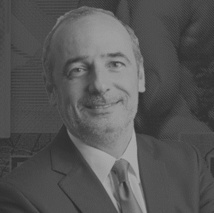
The number of printing factories in charge of secure printing for banknote production in the world is quite small. A handful of highly specialized banknote designers are responsible for keeping the world’s economies fluid, safe from counterfeiting and making the peoples around the globe proud of their country. Among them, the French firm Oberthur Fiduciaire, run by Thomas Savare, which has heaved (and kept) itself on the first tier of the world market. Its angle? Design and intimate knowledge of the world’s cultures.     <div style="position:relative; float:left; padding-right: 1ex;">
      <img src="https://www.thestrategist.media/photo/art/default/10656984-17553147.jpg?v=1480089699" alt="Thomas Savare, the French draftsman of the world" title="Thomas Savare, the French draftsman of the world" />
     </div>
     <div>
      Thomas Savare knows what his own country has to offer. France is a stronghold of some of the <a class="link" href="https://www.timeshighereducation.com/student/best-universities/best-universities-france">world’s best engineering schools</a>, in which he can find the highly-skilled technical experts he needs to keep his business running ahead of the wind. His own school, the <a class="link" href="http://www.ecp.fr/lang/en/homepage">Ecole Centrale in Paris</a>, is known for adding a thick coat of entrepreneurship to the engineers’ training. Those two skills are central to his business. Banknotes are a dense <a class="link" href="http://thenextweb.com/shareables/2016/10/11/uk-five-pound-record-player/">concentration of technology</a>  within a few square inches of paper, over which central banks no longer have any control once the public has received the bills. So the technology had better be solid. In his own words, “<em>banknote printing is an industry governed by permanent challenge: that of staying several steps ahead of counterfeiters</em>”. And once the technology is mastered, there is no point in waiting for central banks around the world to make the call. The small but fiery competition will snatch deals around the globe if he doesn’t. So business audacity and diligence are key. <br />  &nbsp; <br />  As printing techniques get ever finer, <a class="link" href="http://www.news24.com/SouthAfrica/Local/Peoples-Post/fake-banknotes-doing-the-rounds-20161017">counterfeiters</a>  keep at par with “official” banknote producers. They are in direct, yet secret, competition with their legal counterparts to hire the best engineers, develop the finest techniques and acquire the best material. <br />  &nbsp; <br />  The industry is closely intertwined with world geography. Symbols, colors, and paper will change according to cultures, climates and nations. A look at <a class="link" href="http://www.oberthur-fiduciaire.com/en/">Oberthur Fiduciaire’s</a>  business configuration gives a good hint at the geographic riddles Thomas Savare is regularly confronted to: despite earning almost all of its revenue abroad, Savare chooses to remain in the historic cradle of his company, the Western town of Rennes. Moving abroad, into his bigger markets would maybe bring him closer to his key accounts, but would sever him from what he sells, deep down: French <em>savoir-faire</em>. Due to the growth of his company, he has recently set up a <a class="link" href="http://www.bnb.bg/PressOffice/POStatements/POADate/PR_S_GC_20131017_EN">joint venture</a>  plant in Sofia, aiming at the same quality standards as in Rennes where Oberthur Fiduciaire headquarters and main manufacturing facilities shall remain. <br />  &nbsp; <br />  But banknotes go beyond concentrated aggregates of high-tech, they also have a complex and <a class="link" href="http://www.digitalartsonline.co.uk/news/graphic-design/reimagined-british-banknotes/">rich social function</a>. Because they symbolize the wealth and value of a country, they also symbolize people’s work and their attachment to their national economy. It is a token of their successful attempt of working together and building a national project. Therefore, the design of the bills is kept under very close scrutiny. The choice of the symbols, be they national heroes or symbolic monuments, is usually made, upon design suggestions from the printing company, by the receiving country. Once the choice is made, the designers will work every single detail of the graphic project. <br />  &nbsp; <br />  Here again, Thomas Savare knows he has a good angle on the market. He knows his country’s<a href="http://content.time.com/time/world/article/0,8599,1731267,00.html"> worldwide reputation</a> for the quality of its artists. Indeed, throughout the years and centuries, Oberthur Fiduciaire has produced stamps, bills, calendars and all sort of other prints which have embedded themselves in the visual memories of his country. His industrial ancestor, Joseph Oberthur, the grandson of the founder was a renowned draftsman, specialized in animals. When speaking of him, Savare says “<em>he was an exceptional draftsman. One might think that aesthetics is jammed within family genes! Still today, we aim at cultivating this aesthetic sense, which we place at the service of the cultures of the entire world”</em>. <br />  &nbsp; <br />  Banknote printing requires something beyond high-tech printing methods, and graphics expertise. Above all, it requires perfect command of cultures, nations, economies, and the peoples within them. Not only does a secure printing company need a global network of agents to find and secure deals, Savare knows there is no way he will present a catalog to his customers, in which they could pick and choose. Banknotes are so symbolic that he will need to start from scratch each time, in order to transpose the essence of a nation on a rectangular piece of technological paper. <br />  &nbsp; <br />  The French reputation for graphic arts, both past and present, is a powerful wind to fill the sails of Oberthur Fiduciaire, and Thomas Savare knows it. The French reputation for high-tech engineering is just as strong. And the combination of the two reps is what Oberthur Fiduciaire has been making a good living on for several centuries.
     </div>
     <br style="clear:both;"/>
    ]]>
   </content>
   <link rel="alternate" href="https://www.thestrategist.media/Thomas-Savare-the-French-draftsman-of-the-world_a1804.html" />
  </entry>
  <entry>
   <title>Flexibility, the Next Big Thing For Modern Armament</title>
   <updated>2015-08-04T18:10:00+02:00</updated>
   <id>https://www.thestrategist.media/Flexibility-the-Next-Big-Thing-For-Modern-Armament_a804.html</id>
   <category term="Management &amp; Strategy" />
   <photo:imgsrc>https://www.thestrategist.media/photo/art/imagette/8103014-12634429.jpg</photo:imgsrc>
   <published>2015-08-04T17:58:00+02:00</published>
   <author><name>La Rédaction</name></author>
   <content type="html">
    <![CDATA[
The twentieth century has been rich in shifts. When an army’s job was to defeat the opponent, barely a century ago, the number of missions which befall armed forces today has quickly gone from 2 to 4. To defensive and offensive missions, governments have added stability and support operations. This change goes beyond training: it requires for equipment and vehicles to be completely re-thought. And flexibility became a crucial requirement, especially for European countries, where Defence spending is actually falling.     <div style="position:relative; float:right; padding-left: 1ex;">
      <img src="https://www.thestrategist.media/photo/art/default/8103014-12634429.jpg?v=1438704566" alt="Flexibility, the Next Big Thing For Modern Armament" title="Flexibility, the Next Big Thing For Modern Armament" />
     </div>
     <div>
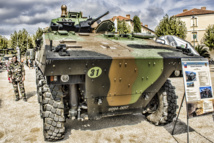
      Beyond purely military missions – war, said bluntly – are <a class="link" href="http://www.un.org/en/peacekeeping/operations/current.shtml">PKOs</a>  (Peace Keeping Operations) under UN leadership. These missions are subdivided into 15 different sub-missions, namely military, police, rule of law, civil affairs, electoral assistance, Security sector reform, mine action, disarmament, etc. Missions must be discriminated, between peace-keeping and peace-enforcing operations. In the former case, the military are in charge of maintaining fragile peace, which requires presence and monitoring, but almost excludes any use of force. In the latter situation, force will be used, but in the most limited and carefully calibrated way. In these missions, the goal is to invert escalation: every use of force must lead to a reduction of violence in the following days. In both these cases, intimidation is key: the antagonistic parties must be subdued with no violence. Scaling the appearance of the military deployment is therefore of the essence. This explains why the UN deploys military vehicles, with deadly cannons and roaring motors, but painted in virgin white and driven by soldiers with sky-blue helmets. <br />   <br />  But of course these missions have not replaced traditional military tasks, they have simply added to them. Armies must still be able to scale all the way up to all-out battles, should need be. All the subtle levels of visual intimidation and kinetic violence must be tunable. Now, though modern armies all understand that the next mission may be anywhere on that scale, it is of course out of the question to have an army for each mission. In recent years, modularity has therefore become a key factor in the way Defense Forces have chosen their equipment. Three examples come to mind: <br />   <br />  The <a class="link" href="http://www.airforce-technology.com/projects/aw101-helicopter/">AgustaWestland AW 101</a>  helicopter, also called the British Merlin, has been in service in the British armed forces over the past 15 years. It has proven reliable and, most of all, able to take a very wide array of missions, from transport, to area control, and from medical evacuations to commando movements. The helicopter has been modified and declined in 35 different configurations. It has been used for area control using the Honeywell <a class="link" href="http://www.l-3mps.com/oceansystems/helras_ds-100.aspx">HELRAS</a>  dipping sonar and the Eliradar, enabling it to monitor surface, underwater and air activity all at once. The 410 model was able to deploy folding rotors for storage on aircraft carriers. The rear loading ramp enables lading the chopper with goods for rapid humanitarian relief or quick military replenishment. Advanced avionics make it fit for Special Forces operations. It has also been used by many armies as a rescue chopper, with a large side bay door, enabling lying-down embarking. Along with naval anti-mine activity, it has been used for every possible mission, except pure combat missions, which are still the reserved playground for combat choppers. <br />   <br />  The Franco-Italian <a class="link" href="http://www.naval-technology.com/projects/fremm/">FREMM frigate</a>  is a particularly modern, and therefore telling, illustration. The weapons program was shared between France and Italy (17 models for France, 10 for Italy). Although the vessel is a warship, it is able to perform a very wide array of missions, beyond traditional military ones. With a large sea-to-land interface, and a powerful SPY-1 or Herakles radar, it can lead amphibious missions but also quickly deploy humanitarian means. With its new generation radar, it can just as well intercept enemy navies as it can monitor illegal immigration (or narcotics) fast boats, something Italy <a class="link" href="http://www.theguardian.com/world/2014/aug/15/italy-coalition-government-angelino-alfano-immigration-tension-mare-nostrum">is in dire need of</a>, as it is on the edge of Europe. And the advanced communication systems, it can coordinate or partake to logistics operations, be they military, civilian, humanitarian or security-based. The ship perfectly illustrates the dual necessity of military equipment: it will quite often be used for non-military missions, or security purposes, but must also be always able to perform pure combat missions against enemies of any size. <br />   <br />  But the flexibility requirement even applies within military missions. Any military equipment manufacturer knows this: you know what your piece of kit can do when it rolls out of the factory; but you never know what it will have to do, once it is on the battlefield. A simple infantry vehicle can become a command car, if necessity dictates. Just as a reconnaissance vehicle will be used for combat, if nothing else is at hand. In addition, modern armies have considerably raised awareness of the necessity to optimize use of military funds. Using the same vehicle in various configurations greatly facilitates maintenance and logistics, and therefore comes cheaper than specific maintenance lines for each vehicles. <br />   <br />  The French have fielded <a class="link" href="http://www.armyrecognition.com/weapons_defence_industry_military_technology_uk/nexter_systems_vbci_8x8_armoured_vehicle_ready_to_be_used_as_modular_platform_for_multi_mission_0903.html">the VBCI</a>, the <em>Vehicule blinde de combat d’infanterie</em>, in their infantry regiments. Two versions are currently available in French army: command post vehicle, fitted with .50 caliber remotely operated weapon, and Infantry Fighting vehicle armed with 25mm gun turret. VBCI is a modular platform that can be adapted to needs: all variants are designed to fit the same base frame and use the same spare parts, in order to reduce the logistical footprints. This supports overall efficiency at the brigade level, with light and flexible logistics, and ensuing speed and agility. The same heavily armored and highly mobile vehicle will be fitted with various modules and become ambulances, reconnaissance vehicles, anti-tank vectors, command cars, engineering platforms, etc. <br />   <br />  If the VBCI is basically designed to be an armored personal carrier, it could be armed with manned or unmanned high-power turrets, as a Nexter Systems 25mm gun turret, BMP3&nbsp;100mm turret in the case of the United Arab Emirates variants, or even the powerful CTA40 from CTA International. The <a class="link" href="https://www.youtube.com/watch?v=1fReEk4Ny14">CTA40</a>  was designed to provide IFV with the superior firepower of a medium caliber weapon, integrated in a smaller turret than usual. VBCI variants also include self-propelled mortar carrier, with a semi-automatic 120mm mortar mounted at the rear side of the vehicle and, able to provide heavy fire-support on short notice. The need for those variants reflects the fact that flexibility and modularity are expressly recognized as vital factors by armed forces. <br />   <br />  Many things have changed over the past 50 years, in Western armies. From conscription armies, where two enemy formations slammed into each other, we have moved to a more elaborate level, where making the best use of the means we have, and keeping as flexible as possible, as become the way to win the war, sometimes even before it started. When armies are too expensive to maintain and vehicles start falling apart, battles often don’t even need to be waged: the outcome is known beforehand.
     </div>
     <br style="clear:both;"/>
    ]]>
   </content>
   <link rel="alternate" href="https://www.thestrategist.media/Flexibility-the-Next-Big-Thing-For-Modern-Armament_a804.html" />
  </entry>
  <entry>
   <title>Growth and Innovation through Social Collaboration</title>
   <updated>2015-03-14T05:43:00+01:00</updated>
   <id>https://www.thestrategist.media/Growth-and-Innovation-through-Social-Collaboration_a79.html</id>
   <category term="Management &amp; Strategy" />
   <photo:imgsrc>https://www.thestrategist.media/photo/art/imagette/7567642-11679145.jpg</photo:imgsrc>
   <published>2015-03-14T05:36:00+01:00</published>
   <author><name>The Strategist</name></author>
   <content type="html">
    <![CDATA[
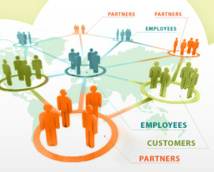
Social collaboration is key to sustainable growth for an organization. It is a key harbinger of growth, higher revenues and acts as a platform for continuous innovations.     <div style="position:relative; float:left; padding-right: 1ex;">
      <img src="https://www.thestrategist.media/photo/art/default/7567642-11679145.jpg?v=1426308156" alt="Growth and Innovation through Social Collaboration" title="Growth and Innovation through Social Collaboration" />
     </div>
     <div>
      <div style="text-align: justify;">There needs to be a common goal, a strategic vision and a road map that details a series of small steps towards that goal. In order to even take a small, entities which make up an organization need to work together and synchronize. Employee’s cooperation and collaboration are for an organization’s success. <br />  &nbsp; <br />  The concept of collaboration has now evolved to the next rung – social collaboration. Just as in its earlier definition, every employee, every team,&nbsp;every department, of an organisation works towards one common goal, but with a catch. The beauty of social collaboration is that this goal need not be pre-defined. <br />  &nbsp; <br />  By combining and putting our heads together towards one common purpose, idea generation, can be optimized, brainstorming sessions can be better streamlined.&nbsp; This is not rehashing the concept of team work, this is certainly not old wine in a new bottle. Sure this essentially teamwork, but with a key difference. It harnesses key <a class="link" href="http://www.sap.com/pc/tech/cloud/software/enterprise-social-networking/collaboration/index.html" target="_blank">technological innovations</a>, and puts them to their optimal use and doing so has made all the difference. <br />  &nbsp; <br />  Social communication need not be a waste of organizational resources. Technological innovations are the harbingers of collaboration that bridge continents and time zones. They provide a platform for the incubation of ideas generated after a brainstorming sessions by individuals across multiple continents. Social collaboration can be the key for that incubated idea which breaks new grounds and is recognized for its genius. <br />  &nbsp; <br />  Social collaboration not only exploits the advantages of brain storming sessions but it also acts as a platform for greater innovation: the ideas discussed by in a social network across different countries lead to better ideas which significantly contribute to better innovations which lead to better products and customer satisfaction, which in turns leads to a larger number of customers, customer loyalty, etc. <br />  &nbsp; <br />  The net result ultimately is higher turnovers, better revenues and profits for the organization. This in turn can be ploughed back into more and better research and development which can not only significantly impact the growth of the company but for the good of society as well. And it all started with social collaboration. <br />  &nbsp; <br />  Social collaboration is a modern platform which when nurtured can enable growth. It has the potential to be the Holy Grail for an enterprise. What is required is strategic vision, and non-interference from the management. Although is easier said than done, but it is more and more visible in startups than in older, more established companies. <br />  &nbsp; <br />  Modern startups have: <br />  &nbsp; <br />  1.&nbsp;&nbsp;&nbsp;&nbsp; The advantage of not having hierarchical structures which block vertical communication. <br />  &nbsp; <br />  2.&nbsp;&nbsp;&nbsp;&nbsp; Information flows freely across horizontal and vertical and is not segmented and isolated. <br />  &nbsp; <br />  3.&nbsp;&nbsp;&nbsp;&nbsp; People who actively and positively contribute to the discussion come into focus as opposed to people who are in a particular position in the organization. <br />  &nbsp; <br />  4.&nbsp;&nbsp;&nbsp;&nbsp; The advantage of being tech savvy and they exploit and harness advances in IT to their advantage. <br />  &nbsp; <br />  5.&nbsp;&nbsp;&nbsp;&nbsp; A focus on internal communication and do not solely depend on their marketing department which tends to focus more on clients for idea generation instead of internalizing the process. <br />  &nbsp; <br />  6.&nbsp;&nbsp;&nbsp;&nbsp; A strategic vision which enables their HR department to focus on long term objectives instead of short term ones. For example, although paying salaries immediately is important, but what is more critical is to ensure that people can be continued to be paid their salaries, three years down the line. <br />   <br />  SAP’s President of Cloud and On-Premise HR says:</div>    <blockquote>  <div style="text-align: justify;">“While this generation wants many of the same things we all want from work – good pay, good benefits, opportunities to grow in our careers and contribute to the company’s success – one way in which they do differ from earlier generations is in their expectations for technology. …&nbsp; These are the digital natives. They’ve grown up with technology all around them. And they expect to use the same type of social networking tools they use in their personal networks.”</div>  </blockquote>    <div style="text-align: justify;">As per Ettling, the benefits of social collaboration easily outweighs its negative overtones. <a class="link" href="http://www.sap.com/pc/tech/cloud/software/business-networks/index.html" target="_blank">Leveraging business</a>  &nbsp;networks is the glue that bind content, people and data, it simplifies work and drives towards sharing of knowledge to a common pool of experience which is a key proponent of growth and innovation. <br />   <br />  <strong>References:</strong> <br />  <a class="link" href="http://www.forbes.com/sites/sap/2015/03/13/is-social-collaboration-the-holy-grail-for-business-growth/"><strong>http://www.forbes.com/sites/sap/2015/03/13/is-social-collaboration-the-holy-grail-for-business-growth/</strong></a>  <br />  <a class="link" href="http://www.successfactors.com/en_us.html"><strong>http://www.successfactors.com/en_us.html</strong></a>  <br />  <a class="link" href="http://www.sap.com/pc/tech/cloud/software/business-networks/index.html"><strong>http://www.sap.com/pc/tech/cloud/software/business-networks/index.html</strong></a> </div>  
     </div>
     <br style="clear:both;"/>
    ]]>
   </content>
   <link rel="alternate" href="https://www.thestrategist.media/Growth-and-Innovation-through-Social-Collaboration_a79.html" />
  </entry>
</feed>