<?xml version="1.0" encoding="UTF-8"?>
<feed xmlns="http://www.w3.org/2005/Atom"  xmlns:media="http://search.yahoo.com/mrss/" xmlns:dc="http://purl.org/dc/elements/1.1/" xmlns:itunes="http://www.itunes.com/dtds/podcast-1.0.dtd" xmlns:geo="http://www.w3.org/2003/01/geo/wgs84_pos#" xmlns:georss="http://www.georss.org/georss" xmlns:photo="http://www.pheed.com/pheed/">
 <title>The Strategist</title>
 <subtitle><![CDATA[Daily news and analysis for corporate &amp; political leaders]]></subtitle>
 <link rel="alternate" type="text/html" href="https://www.thestrategist.media" />
 <link rel="self" type="text/xml" href="https://www.thestrategist.media/xml/atom.xml" />
 <id>https://www.thestrategist.media/</id>
 <updated>2026-06-18T04:20:42+02:00</updated>
 <generator uri="http://www.wmaker.net">Webzine Maker</generator>
  <icon>https://www.thestrategist.media/favicon.ico</icon>
  <logo>https://www.thestrategist.media/var/style/logo.jpg?v=1426090212</logo>
  <entry>
   <title>Drinkable water in Africa: the challenge taken up by Veolia Water Technologies</title>
   <updated>2018-09-13T11:30:00+02:00</updated>
   <id>https://www.thestrategist.media/Drinkable-water-in-Africa-the-challenge-taken-up-by-Veolia-Water-Technologies_a3178.html</id>
   <category term="Markets &amp; Industries" />
   <photo:imgsrc>https://www.thestrategist.media/photo/art/imagette/25457956-26725542.jpg</photo:imgsrc>
   <published>2018-09-07T18:24:00+02:00</published>
   <author><name>La Rédaction</name></author>
   <content type="html">
    <![CDATA[
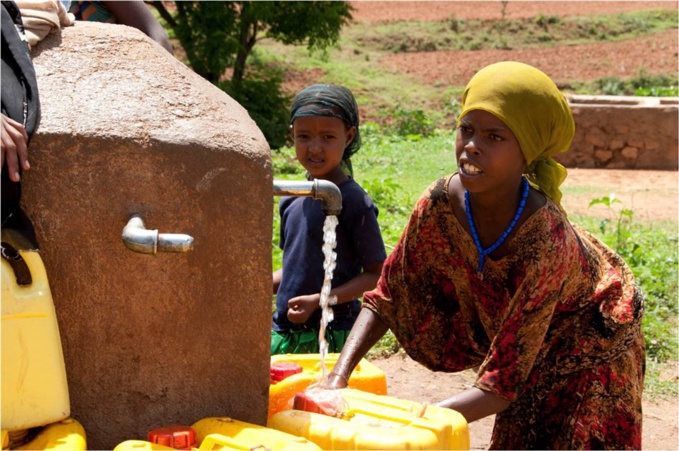
In Africa 320 million people still do not have access to drinkable water that meets the basic hygiene standards. The filtering of used water is an issue as well since 80% of it is simply rejected into the wild and pollutes the environment. Veolia Water Technologies (VWT), a subsidiary company of the French multinational and present in 77 countries, specializes in the services and the filtering of the water. Its new Director for Development in Africa, Sébastien Gary describes for us the many challenges that await VWT in this part of the world.     <div style="position:relative; text-align : center; padding-bottom: 1em;">
      <img src="https://www.thestrategist.media/photo/art/default/25457956-26725542.jpg?v=1536831758" alt="Drinkable water in Africa: the challenge taken up by Veolia Water Technologies" title="Drinkable water in Africa: the challenge taken up by Veolia Water Technologies" />
     </div>
     <div>
      <strong>You have just been nominated Director of the African development of Veolia Water Technologies, what are your long-term goals?</strong> <br />  &nbsp; <br />  It is difficult to answer that question because Africa, and especially the sub-Sahara region, is facing a situation without precedent. The continent is facing demographic issues and a very fast urbanization. Indeed, the population shift from countries to countries within Africa and to occidental, countries makes it difficult to know what our long-term goals should be. Of course, the goal is to give access to drinking water to everyone continuously during the year and during the day. We also must ensure that the resources are still available after a few years. <br />   <br />  It is easy to dig dwells and give access to drinking water, but we cannot be sure that the dwells will operate for fifteen years. First, water will eventually become scarce, and second waste water will be produced and will need to be treated. <br />  If you look at the Senegal river or Niger river for example, the existing water plants are already at the limit because waste water is not treated. Our main goal is to provide the African continent with drinking water and new solutions regarding the waste water management, so the population will always have access to good quality water. <br />  &nbsp; <br />  <strong>For a long time, you have been managing the services as well as the filtering of the water.&nbsp; Water is not a usual product. What are the specifications of such an activity in Africa?</strong> <br />  &nbsp; <br />  A common mistake is to think that there is a scarcity of water. The truth is that there is a scarcity of drinking water. Most Africans have access to water and when we witness children dying because of the water, it is because it is not good quality water. Providing water for large cities is also very difficult. The production itself is not that challenging but the first difficulty is to find financing. Then you need to operate and maintain the water plants which is not easy. I am not talking only about Veolia; the states also have a hard time maintaining the treatment plants. There is a lot of dwells that are being dug and do not operate after a few years. <br />   <br />  The quality of the networks is another issue. In Africa we are facing a very fast urbanization and the cities are growing horizontally and it is very difficult to define what is the exact population of large cities. This growth is not accompanied by the development of the water and electricity networks. For electricity there are solutions like the solar panels or the wind turbines, for water it is more complicated. <br />  &nbsp; <br />  <strong>Water contains a major geopolitical importance and it is common to talk about the “water war”, how do you define your activity at the heart of these issues?</strong> <br />  &nbsp; <br />  Water is a common good and at Veolia we want to be a factor of peace and security in this matter, but it is a delicate one. Let us take the example of the Senegal river: it runs through Guinea, Mali and Senegal. If there are too many water plants in Guinea and Mali, it might be hard to have enough water for Dakar. Another example is Cape town in South Africa: we have been through a three years drought. And now what they call “day zero” is coming when there will not be any running water in the city. With these examples I want to point out that when hear of “water war” we think of wars between countries. But the truth is that it exists within the countries, between cities and regions. <br />   <br />  As a multinational company, our role is to provide water to anyone anywhere. In a region where the population is growing, the lack of water would have catastrophic consequences. There would not be any jobs because without water you cannot have any industry, tourism or agriculture. The populations would have to move and there would be revolts. The climate change is a factor as well that just speeds up the process. <br />  &nbsp; <br />  <strong>Are there differences of challenges between each country? Shortage, managing water reserves, water waste caused by obsolete networks?</strong> <br />  &nbsp; <br />  I sometimes hear companies saying they want to be Burkinabe in Burkina Faso, Kenyan in Kenya etc., but I do not think this is the point. Yes, there are differences between countries and there are very large discrepancies between the networks for drinking water and waste water in Dakar and Mombasa for example. At Veolia we adapt to the local specificities, but we are French and a global company. We have solutions, technologies and capacities to understand the needs of anywhere we go. The answer must be local, so we study the situation and adapt. If there is a river nearby or if the coast is close, the network will be different. Even in the same country the situations can be quite different. Also, depending on the country, there may be grants or financing from a global organization and this has an impact on how we can do our job. <br />  &nbsp; <br />  <strong>What are the other impacts that an efficient water management can have on the development of a country?</strong> <br />  &nbsp; <br />  Air, water and food are the basic human needs. For air there is not a lot we can do except fight against pollution. As far as food is concerned, I personally have tried to come up with very simple concepts to develop local farming. It always comes down to the same issues: the infrastructures are poor, and you cannot keep fruits and vegetables in a cold storage because of the lack of electricity. The cost would be so high that it would be impossible to sell the products on the market. The idea is to use very simple techniques to grow fruits and vegetables all year long in a cool greenhouse. This way, with a very low investment, we can have an impact on a very large number of families. These cultivation poles allow the population to be fixed and not be forced to move. Water provides food and from there you have the beginning of an ecosystem that will enable more and more businesses to develop around it. <br />   <br />  Water has an impact on the industrial sector as well. There is a lot of small to medium size industries that are developing in Africa and they need water to operate. These industries also need to treat their waste water and at Veolia we can help them do that. By doing so, and with the use of our technology, we take part of the water management in Africa. It is an environment requirement and it is always difficult for a government to develop the industry and to abide by these standards. But I truly believe this can be a win-win for the country if the constraints are the same for everyone, starting with the industrial sector.
     </div>
     <br style="clear:both;"/>
    ]]>
   </content>
   <link rel="alternate" href="https://www.thestrategist.media/Drinkable-water-in-Africa-the-challenge-taken-up-by-Veolia-Water-Technologies_a3178.html" />
  </entry>
  <entry>
   <title>Oberthur Fiduciaire: there’s a lot more to a security printing company than meets the eye…</title>
   <updated>2016-05-13T09:20:00+02:00</updated>
   <id>https://www.thestrategist.media/oberthur-fiduciaire-banknote-printing-fiduciary/</id>
   <category term="Markets &amp; Industries" />
   <photo:imgsrc>https://www.thestrategist.media/photo/art/imagette/9469992-15196463.jpg</photo:imgsrc>
   <published>2016-05-07T19:38:00+02:00</published>
   <author><name>La Rédaction</name></author>
   <content type="html">
    <![CDATA[
Founded in 1842, French security printer Oberthur Fiduciaire has become a trusted partner to 70 central banks worldwide. We met Thomas Savare, the CEO of the company, for an interview.     <div style="position:relative; text-align : center; padding-bottom: 1em;">
      <img src="https://www.thestrategist.media/photo/art/default/9469992-15196463.jpg?v=1463123584" alt="Oberthur Fiduciaire: there’s a lot more to a security printing company than meets the eye…" title="Oberthur Fiduciaire: there’s a lot more to a security printing company than meets the eye…" />
     </div>
     <div>
      
     </div>
     <br style="clear:both;"/>
     <div><b>Here at Oberthur Fiduciaire you are doing a fascinating job; printing banknotes for 70-80 central banks across the world. How does a national bank choose a printing company? What are the criteria and the specifications?</b></div>
     <div>
      There are few companies that are qualified to print banknotes and have the right security to be able to offer that to central banks. The criteria to choose a supplier is obviously based on the technical ability, the experience and security, and then, of course price comes into play. The purchasing processes are becoming more and more professional. Now, there are tenders with pre-qualifications for example.
     </div>
     <br style="clear:both;"/>
     <div><b>Your company has been knowledgeable in this sector since 1842.  How did the printing industry evolve since then?  How has it changed the profile of your collaborators? </b></div>
     <div>
      The technology has obviously changed, even though one of the main technologies used since the very beginning is still used today – intaglio printing, used almost exclusively in this industry for printing banknotes. But there are many different techniques that have been adopted more recently, such as varnishing, which emerged maybe 10 -15 years ago. Today, printing a banknote is a multi-step process, you can have as much as 8 or 9 different processes and many different machines that come into play for producing banknotes, which has made the entire process all the more complicated.&nbsp;Of course, the qualifications of our employees has changed along with that evolution. Today, many printing skills, finishing skills and design skills are needed, besides growing R&amp;D activities, all which develop new security features to adapt new techniques and new processes, to enhance the security and the durability of banknotes. These are some of the main concerns of the central banks we work with.&nbsp;
     </div>
     <br style="clear:both;"/>
     <div><b>How has the technological evolution of the job affected the business strategies of Oberthur Fiduciaire?</b></div>
     <div>
      There has been an evolution in the printing techniques themselves, which has had an impact on the day-to-day. With all of the security features that are incorporated into the printing process, such as holograms or threads, there are many different kinds of security elements incorporated into the banknotes.&nbsp;We are a printing company. So when it comes to strategy, we have to master the printing techniques themselves, but we also have to master the job of integrating different technologies, different substrates and different security features. We have to do that within an environment that is highly industrial, because we’re supplying billions of individuals with products that are numbered and personalized. And these products need to be so secure that forgery would be impossible, with the resistance needed to last the day-to-day use of a banknote.&nbsp;
     </div>
     <br style="clear:both;"/>
     <div><b>What are the components of a banknote, and is that specific to fiduciary printing?</b></div>
     <div>
      Part of the security of our business comes from the supply chain, which is unique to the industry. Banknote paper is very specific one, only used for banknotes, and manufactured by extremely niche suppliers who will only sell to recognized banknote printers (state printers or private printers). The same goes for the ink, which is made exclusively for banknote printing. The ink is resistant and has integrated security features, to be long lasting.&nbsp;You won’t find these requirements anywhere else in the printing industry. It’s very unique – from the holograms designed for banknotes to the threads specifically designed to be incorporated in the banknote paper.&nbsp; The entire supply chain is dedicated to this industry and that’s a large part of the security of a banknote.&nbsp;
     </div>
     <br style="clear:both;"/>
     <div><b>Why are the designs and the esthetics so important to the overall process?</b></div>
     <div>
      The design is essential because it’s a matter of security and conveys the image of a country. We incorporate the security features into the design. But there is also an artistic part to it. You have to be able to understand the history and the symbols of a country to create attractive designs tailored to the specific culture. That is what makes the design of each banknote very interesting.
     </div>
     <br style="clear:both;"/>
     <div><b>Can you explain how Oberthur Fiduciaire integrates the securities and technological crucial points to prevent forgery?</b></div>
     <div>
      Obviously I can’t go into too much detail into the secure technologies that we use, but there can’t be only one security feature that prevents counterfeiting. For us, we use a collection of different barriers to fight potential forgers. There are a lot of technologies used to make the paper itself, the threads, the fibers, the printing techniques… It’s a very thorough combination of different security features. And our business is evolving constantly because we have to introduce new security features on an ongoing basis.&nbsp;
     </div>
     <br style="clear:both;"/>
     <div><b>You recently created a joint-venture out of Bulgaria for banknote production. Are new markets in emerging countries an opportunity for you to grow?</b></div>
     <div>
      Definitely yes! But that is separate from our joint venture in Bulgaria. We operate in both developed countries and emerging countries. It’s been like this since the beginning. We are now addressing the market from our two plants in France and Bulgaria. We have the exact same standards in terms of quality, security, knowhow and capabilities from those two plants. The clients who choose Oberthur Fiduciaire as a supplier know that they will get the exact same quality whether banknotes are printed in France or in Bulgaria.&nbsp;
     </div>
     <br style="clear:both;"/>
     <div><b>Will banknotes survive the rise of online payments?</b></div>
     <div>
      I think there are a lot of preconceived ideas about that. I can’t predict whether or not banknotes will have disappeared in two hundred years. There is competition between print payments and the evolving electronic methods today. But we actually just completed a thorough statistical analysis in developed countries. Interestingly enough, we have found that usage of banknotes has consistently increased over the last fifteen years, between 50% and 100%.&nbsp;While I can’t see future, the volume of printed banknotes is growing faster than GDPs. That might come as a shock considering the rise in electronic payments, but the reality is that cash is still king and growing in developed economies… and even faster in emerging economies.
     </div>
     <br style="clear:both;"/>
    ]]>
   </content>
   <link rel="alternate" href="https://www.thestrategist.media/oberthur-fiduciaire-banknote-printing-fiduciary/" />
  </entry>
  <entry>
   <title>Malaysia and Investments : Economic crutch or Helping Hand?</title>
   <updated>2015-07-20T17:11:00+02:00</updated>
   <id>https://www.thestrategist.media/Malaysia-and-Investments-Economic-crutch-or-Helping-Hand_a748.html</id>
   <category term="World &amp; Politics" />
   <photo:imgsrc>https://www.thestrategist.media/photo/art/imagette/8044625-12528517.jpg</photo:imgsrc>
   <published>2015-07-20T16:58:00+02:00</published>
   <author><name>La Rédaction</name></author>
   <content type="html">
    <![CDATA[
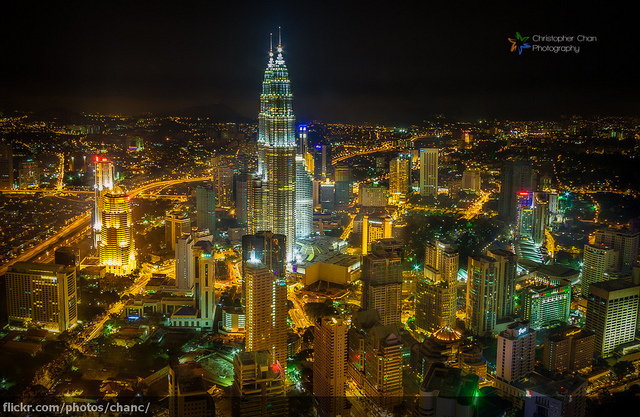
Malaysia is a unique country, being led by an elected Sultan. It is a state in the Southeast Asia, which has made great success in the economy and world politics in less than 50 years of independence from Britain, having turned into one of the "Asian tigers" from a colony. In 2015, Malaysia is at the 7th place in the Bloomberg's rating of the 20 Fastest-Growing Economies This Year. While some developed countries' economies are in a period of stagnation, the economy of Malaysia is growing by enviable pace.     <div><b>Why do investors choose Malaysia?</b></div>
     <div style="position:relative; text-align : center; padding-bottom: 1em;">
      <img src="https://www.thestrategist.media/photo/art/default/8044625-12528516.jpg?v=1437404751" alt="Malaysia and Investments : Economic crutch or Helping Hand?" title="Malaysia and Investments : Economic crutch or Helping Hand?" />
     </div>
     <div>
      It is important to note that multibillion foreign loans played the key role in Malaysian economy surge. But the investing of huge sums on country development does not mean the future prosperity of any country, and there are many examples of how the funds from abroad were "dissolving" somewhere on midway. The countries of the "third world" with monarchical systems are famous for corruption problems. Taking into account these facts, it seems to be that the Malaysian economy has been doomed to failure. However, money that came from overseas was not settled in the pockets of officials, but invested in the development of industries that are bringing the incomes to the country now. <br />   <br />  The corruption level managed to be significantly reduced due to the unique state form of Malaysian government, and foreign investors come to the country being sure that their business is now protected by well-adjusted mechanisms of legal regulation. <br />  Foreign direct investments in Malaysia in 2014 were equal to $ 10.9 billion. At the present stage foreign investments from 30 countries are registered in Malaysia. <br />   <br />  However, the vast majority of investments (about 90% of their total amount) come from the UK, the US and Japan. The remaining portion of the investments comes from companies of Germany, France, Italy, Canada, Sweden, Switzerland, Denmark, Belgium, Norway and Australia, as well as companies of the neighboring states such as Singapore, Hong Kong, Thailand and others. <br />   <br />  The most popular sectors among the investors are manufacturing (37,6%), mining, oil and gas sector (28,7%), finance and insurance (9,4%) (Bank Negara Malaysia, 2013). It's not surprising that manufacturing sector takes the largest part of investments, because it happens everywhere. But why does the investment in natural resources take the second place in Malaysia where the real estate market is very attractive and technological sector is well-developed?
     </div>
     <br style="clear:both;"/>
     <div><b>What’s about those natural resources?</b></div>
     <div style="position:relative; text-align : center; padding-bottom: 1em;">
      <img src="https://www.thestrategist.media/photo/art/default/8044625-12528517.jpg?v=1437405077" alt="Malaysia and Investments : Economic crutch or Helping Hand?" title="Malaysia and Investments : Economic crutch or Helping Hand?" />
     </div>
     <div>
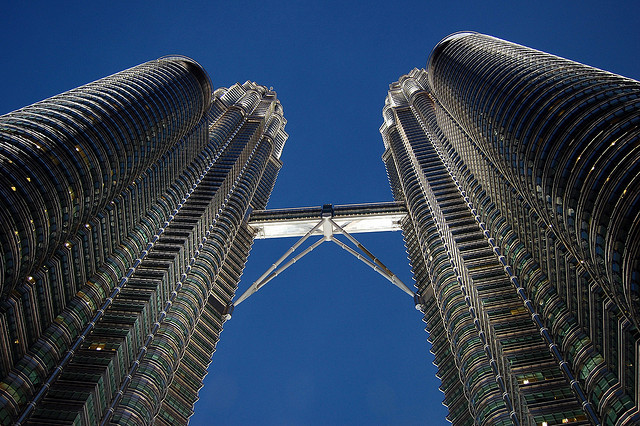
      Let's turn to the gas industry market. Malaysia's natural gas reserves are estimated at about 100 tscf (<em>Trillions of standard cubic feet of gas</em>), whereas gas production reaches 1,046 kboe/day (Malaysia: Natural Gas Industry Annual Review, 2014). The country's largest oil and gas company Petronas is considered to be one of the most influential in the region and is at the 69th place in the Fortune Global 500 rating (data 2014). <br />   <br />  Despite rather good statistics, the situation in the country was represented in a fairly unattractive way till a certain time. The depletion of large deposits was a real threat to affect the industry. But with the discovery of new fields (e.g. Damar gas field near the east coast of Malaysian peninsula with the estimated capacity of approximately 5.7 million cubic metres (200 million cubic foot) of gas per day), the situation has improved. <br />   <br />  Damar is being developed under the production sharing agreement between ExxonMobil, Petronas Carigali and Petronas. ExxonMobil acts as the project operator. A subsidiary of the US company ExxonMobil Exploration and Production Malaysia Inc. holds a stake of 50%. The remaining 50% is owned by Petronas Carigali. <br />   <br />  As the president of ExxonMobil Development Company Neil W. Duffin noted, the success of the Damar deposit will assist in meeting the growing demand for natural gas in Malaysia, as well as will significantly expand overseas production potential of ExxonMobil. <br />  The beginning of gas production at the field was preceded by the launch of another Malaysian field in March 2013 called Telok, where ExxonMobil is also the operator.
     </div>
     <br style="clear:both;"/>
     <div><b>Flies in the ointment</b></div>
     <div>
      On the course of its development, Malaysia is facing with different challenges such as partial dependence on oil and gas export and, as a result, weakening of its currency - ringgit. A loan payment of $560 million was delayed twice by the quasi sovereign wealth fund 1Malaysia Development (1MDB), and it was not very good for the country. Ecological problem is also one of the most significant ones. Malaysia, as a country with developed oil and gas industry, faces constantly with the problem of preserving the environment. <br />   <br />  One of the ways out is to invest in the industry development and to search for new ways of solving the problems. <br />   <br />  The catch is that the combined efforts of the Government and Malaysian companies are not enough to maintain the industry at the appropriate level. Having large number of problems to be solved is really not easy. And that's why the country's policy towards foreign investments becomes clear. Foreign partners not only provide a stable cash flow, but also help in solving some operational problems.
     </div>
     <br style="clear:both;"/>
     <div><b>Anybody else?</b></div>
     <div>
      As mentioned above, about 90% of all investments to Malaysia come from the UK, the US and Japan. These are the giants, whose contribution is extremely difficult to outweigh. And, in fact, Malaysia is a strategic partner for some of them. But what about the other investors? Let's take France as an example. In 2013, the Malaysian newspaper The Star reported France to be one of the most important international partners of the country today. <br />   <br />  It's confirmed by the fact that there was a plant producing components for aircraft in Sendayan, Negri Sembilan. In this regard, Prime Minister Datuk Seri Najib Tun Razak considered the investments as a proof of good relationships between the two countries, reported The Star. According to his words, France made investments in the sum of $135 million for manufacturing carbon discs for aircraft brakes to be distributed in Asian countries. <br />   <br />  “Then we have the biotech investment in Terengganu between Arkema of France and CJ CheilJedang of South Korea. These are two significant investments and we look forward to receiving more from French investors,” he reported. <br />  Having visited Malaysia, French Prime Minister at the time Jean-Marc Ayrault admitted then that France was eager to assist Malaysia in becoming a well-developed country by 2020. <br />   <br />  - Malaysia is France’s second largest economic partner in Asean and there are some 260 French companies here. They are ready to support all the projects to help Malaysia achieve the developed status by 2020, he said. <br />   <br />  Ayrault also noticed that another aim of his coming to Malaysia was to explore the new options for both small and medium French companies working in such spheres as infrastructure, information and communication, and sustainability. <br />   <br />  Some time before, the Prime Ministers of both countries signed the three memoranda of understanding (MoU). <br />   <br />  So, despite the vast geographical distance, France and Malaysia are now successful economic partners. This is confirmed not only by official visits, but also, as mentioned above, the presence of French investing companies in the market, which make contribution to the development of the country. For example, the French Veolia, which is the world's leading operator in the field of water management, has already six offices in Malaysia. <br />   <br />  Patrick Couzinet, Business Development Director at Veolia Water Technologies, comments: <br />  - “Our early presence in Malaysia helped us understand the recent history and the culture that underpin its economic development today. Malaysians are particularly attached to environmental protection, since they became aware of ecological risks related to industrialization. Last year for example, Veolia entered a 20-year partnership with 1MDB concerning the prestigious Tun Razak Exchange Project, within which we aim to recover at least 80% of expected sewage generated. Finally, we’ll contribute to cut site-wide fresh water demand by half.”&nbsp;&nbsp;&nbsp; <br />   <br />  Dato’ Haji Azmar Talib, the CEO of Tun Razak Exchange, confirms : <br />  - “TRX is committed to sustainability and we are proud to undertake this with a strong, reputable partner. This is in line with efforts to improve treatment practices for waste water towards achieving the Greater KL goals which the Government has outlined. This partnership with Veolia is a key component in achieving world-class sustainability in Malaysia. It will also be economical for tenants, demonstrating that sustainability doesn’t always have to be expensive.”&nbsp;
     </div>
     <br style="clear:both;"/>
     <div><b>Fruitful efforts</b></div>
     <div>
      It is obvious that the country's efforts are already delivering some great benefits, which can be inferred by the statements made by the Minister of Economic Planning of Malaysia Abdul Wahid Omar. He stated that Malaysia could achieve its goal of becoming a developed country for six years or even earlier, as the growing private investments compensated any decrease in public spending (October 2014). <br />   <br />  In 2010, Prime Minister Najib Razak announced a plan, known as the "Program of economic reforms", to attract $ 444 billion of local and foreign investments by 2020, starting with oil storage tanks and ending with the metro in Kuala Lumpur. <br />   <br />  Yet the third-largest economy in South-East Asia is ahead of its neighbors because of economies growth rate reduction in Indonesia and Singapore in the last quarter. <br />   <br />  - This country is one of the flagships, one of the few economies showing progressive growth," - said Crystal Tang, an analyst from the Singapore unit of Capital Economics Ltd. <br />   <br />   <br />  &nbsp;
     </div>
     <br style="clear:both;"/>
    ]]>
   </content>
   <link rel="alternate" href="https://www.thestrategist.media/Malaysia-and-Investments-Economic-crutch-or-Helping-Hand_a748.html" />
  </entry>
</feed>