<?xml version="1.0" encoding="UTF-8"?>
<feed xmlns="http://www.w3.org/2005/Atom"  xmlns:media="http://search.yahoo.com/mrss/" xmlns:dc="http://purl.org/dc/elements/1.1/" xmlns:itunes="http://www.itunes.com/dtds/podcast-1.0.dtd" xmlns:geo="http://www.w3.org/2003/01/geo/wgs84_pos#" xmlns:georss="http://www.georss.org/georss" xmlns:photo="http://www.pheed.com/pheed/">
 <title>The Strategist</title>
 <subtitle><![CDATA[Daily news and analysis for corporate &amp; political leaders]]></subtitle>
 <link rel="alternate" type="text/html" href="https://www.thestrategist.media" />
 <link rel="self" type="text/xml" href="https://www.thestrategist.media/xml/atom.xml" />
 <id>https://www.thestrategist.media/</id>
 <updated>2026-03-15T15:53:19+01:00</updated>
 <generator uri="http://www.wmaker.net">Webzine Maker</generator>
  <icon>https://www.thestrategist.media/favicon.ico</icon>
  <logo>https://www.thestrategist.media/var/style/logo.jpg?v=1426090212</logo>
  <entry>
   <title>Experts’ debate: what does a cashless society mean?</title>
   <updated>2019-09-17T12:19:00+02:00</updated>
   <id>https://www.thestrategist.media/Experts-debate-what-does-a-cashless-society-mean_a3979.html</id>
   <category term="World &amp; Politics" />
   <photo:imgsrc>https://www.thestrategist.media/photo/art/imagette/37369310-33026637.jpg</photo:imgsrc>
   <published>2019-09-16T09:32:00+02:00</published>
   <author><name></name></author>
   <content type="html">
    <![CDATA[
The phenomenon is only just coming into debate but has been underway for many years: as time goes by, economies resort less and less to cash for payments, and increasingly to digital means. If cash is no longer king, what can we expect our societies and economies to look like tomorrow?     <div style="position:relative; text-align : center; padding-bottom: 1em;">
      <img src="https://www.thestrategist.media/photo/art/default/37369310-33026637.jpg?v=1568716507" alt="Experts’ debate: what does a cashless society mean?" title="Experts’ debate: what does a cashless society mean?" />
     </div>
     <div>
      <strong>The lay of the land</strong> <br />  &nbsp; <br />  A century ago, purchases as large as houses were often still made with cash, leaving “immaterial” payment means to the very top of the economy. Then came checks and credit cards, which gradually eroded the position of cash in our economies. Today, we have more payment methods than we can count: cash, check, debit card, credit card, wire transfer, swift payment, PayPal, NFC payment, and many others. But as cash had to make room for its competitors, various public and private organizations started daydreaming about how life would be if cash disappeared completely. Well, put simply, some would <a class="link" href="https://www.cashless-economy.com/Why-commercial-banks-are-lobbying-in-favor-of-a-cashless-economy_a23.html">win</a>, and some would <a class="link" href="https://www.cnbc.com/2018/12/19/millions-would-be-put-at-risk-in-a-cashless-society-research-warns.html">lose</a>, in the shift. The debate therefore hinges on many different parameters and unfolds differently in each country. Scandinavian countries are among the most cashless countries in the world, and it’s hard not to link that to the fact that Northern peoples have traditionally placed immense levels of trust in their government. Germans, on the other hand, have always resisted the cashless revolution - as they remember what can happen when citizens put their entire fate in the hands of an all-powerful State. Many experts have addressed the matter, bringing perspective and nuance into the debate. <br />  &nbsp; <br />  <strong>The upsides of a digital economy</strong> <br />  &nbsp; <br />  Banks would be the first to benefit a cashless world, and they barely hide it. Cash represents the least convenient, most dangerous and most expensive form of money which banks handle. Banknotes must be counted, transported, distributed, collected, changed, etc., all at the expense of the bank. It is therefore unsurprising that they are keen to get rid of this medium, in favor of “electronic money” which can be handled in a far easier way. Banks would thus increase their profits and provide their ensuing share of revitalization to the overall economy. In addition, the deletion of currency would annihilate the risk of bank runs, which send shockwaves throughout economies: if cash didn’t exist, citizens would be unable to withdraw their funds, and banks would be secured. Citadel professor Richard Ebeling, <a class="link" href="https://www.heartland.org/news-opinion/news/the-dangers-of-negative-interest-rates-and-a-cashless-economy">writes</a>  : “<em>With nominal interest rates in the United States and some other places around the world still at historical lows (even in the face of recent Federal Reserve rate increases), Rogoff points out that many central bankers hope that more direct fiscal policy will carry the weight of countercyclical activities in the face of any serious recession that may come</em>.” <br />  &nbsp; <br />  Public agencies would also benefit from all-digital economies. The argument according to which tax evasion occurs mainly through cash is, in fact, obsolete (tax evaders have far more modern and efficient systems within the digital world than suitcases full of heavy cash). But large economic bodies, such as central banks, are often blind sighted by cash. When a public measure is launched, central banks need to measure the effects of the reform, and the feedback is obtained through monitoring computers. The cash segment of the economy is therefore hard to measure because it evades central control. Finally, even though the numbers involved are microscopic, cash is often linked to <a class="link" href="https://www.icc-ccs.org/index.php/1116-criminals-still-prefer-cash-for-money-laundering">criminal activities</a>  - although banning it would amount to limiting the freedom of the innocent majority, in sanction for the abuse of a small minority. <br />  &nbsp; <br />  <strong>But many looming dangers</strong> <br />  &nbsp; <br />  The risks entailed by a cashless revolution are many. Social inclusion experts fear that an all-digital economy will further disenfranchise the poor, who traditionally have little access to banking services. Professor Sylvain Charlebois, from Dalhousie University, <a class="link" href="https://www.citynews1130.com/2019/07/20/move-towards-cashless-economy-could-shutout-lower-income-shoppers-dalhousie-prof/">explains</a>  : “<em>Almost a million Canadians don’t have a bank account, or a credit card, or a debit card, and so that’s problematic. So, if you are to go cashless, 100 percent, you are excluding a segment of the population that has less means</em>.” Specialized charities see in the demise of cash the death of one of the last remaining opportunities for old people to interact socially, as they visit the store or hand a note to their grandchildren. Professor Steve Worthington, from the Swinburne University of Technology, <a class="link" href="https://theconversation.com/depending-on-who-you-are-the-benefits-of-a-cashless-society-are-greatly-overrated-113268">writes</a>  : “<em>About 17% of the British population – over 8 million adults – would struggle to cope in a cashless society, the report says: While most of society recognises the benefits of digital payments, our research shows the technology doesn’t yet work for everyone</em>.” Environmentalist agencies are suspicious of the large hidden cost of the digital era. Toby Miller, professor of cultural industries in London, <a class="link" href="https://www.theguardian.com/sustainable-business/human-environmental-cost-new-technology">explains</a>  : “<em>suggestions that we live in a dematerialised world are not only exaggerated; they are doing more harm than good. One person's cloud is another's pollution, and one person's mobile is another's enslavement. From electronic waste to conflict minerals, the new media leave an indelible mark on bodies and the Earth they inhabit.</em>” Cyber specialists have identified that any successful attack either on the power grid or on telecommunications systems could <a class="link" href="https://www.globalresearch.ca/cyber-risks-the-achilles-heel-of-cashless-economies/5653002">cripple our economies</a>  in a few hours. <br />  &nbsp; <br />  Overall, it appears that the lowering trend of cash is relatively harmless, or is even advantageous in some cases, but only if the free choice of citizens is respected. In some cases, people will find cashless payments more convenient and, if they can use them, it makes the world a better place. However, if cash is fully forced out of economies by corporate plans and governmental authority, it will indeed open a pandora’s box, and reverting will be nearly impossible
     </div>
     <br style="clear:both;"/>
    ]]>
   </content>
   <link rel="alternate" href="https://www.thestrategist.media/Experts-debate-what-does-a-cashless-society-mean_a3979.html" />
  </entry>
  <entry>
   <title>Visa's plan to push cashless transactions: what about ethics?</title>
   <updated>2018-11-07T12:05:00+01:00</updated>
   <id>https://www.thestrategist.media/Visa-s-plan-to-push-cashless-transactions-what-about-ethics_a2650.html</id>
   <category term="Management &amp; Strategy" />
   <photo:imgsrc>https://www.thestrategist.media/photo/art/imagette/19401107-23301585.jpg</photo:imgsrc>
   <published>2018-01-04T08:22:00+01:00</published>
   <author><name>The Strategist</name></author>
   <content type="html">
    <![CDATA[
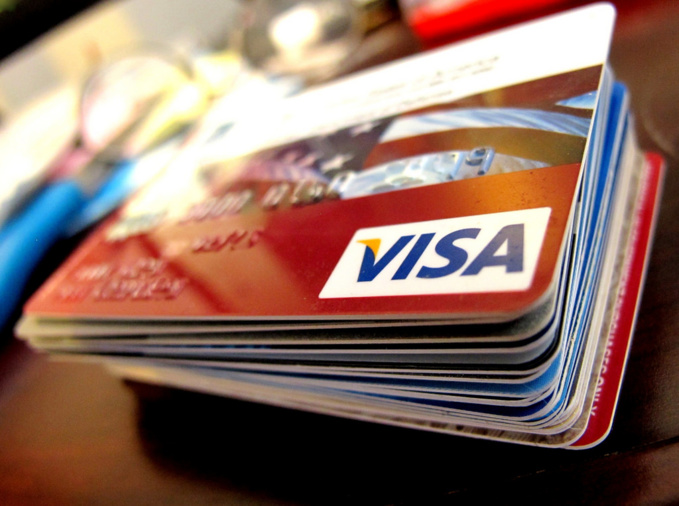
Visa has launched the Cashless Challenge, in which it will give 10 000 dollars to 50 selected shops across the US, if they completely stop accepting cash payments. Its goal, pushing the cashless evolution of the economy to the brink, and killing cash off completely, so as to conquer the entire market. But many ethical questions lie in the way of the campaign, which Visa seems uninterested in acknowledging.     <div style="position:relative; text-align : center; padding-bottom: 1em;">
      <img src="https://www.thestrategist.media/photo/art/default/19401107-23301585.jpg?v=1515587094" alt="Visa's plan to push cashless transactions: what about ethics?" title="Visa's plan to push cashless transactions: what about ethics?" />
     </div>
     <div>
      Cashless challenge is one of the first formalized moves by a private business since the beginning of the cashless slide which started at the end of last century, when consumers started leaving cash aside and paying with plastic instead. Since those early days, <a class="link" href="https://www.visaeurope.com/making-payments/more-ways-to-pay/">many new means</a>  of payment have arrived on the market, with a huge boost provided by smartphones flooding the market. Of course, many different parties were fond of this natural trend, such as governments (which see in cash an incentive for crime and a vector for<a class="link" href="https://www.ft.com/content/06f46b4c-6653-11e7-9a66-93fb352ba1fe"> tax evasion</a>) and financial institutions, such as banks and virtual payment companies. Using soft power and media influence, they encouraged it. Riju Dave wrote for the <a class="link" href="http://economictimes.indiatimes.com/wealth/spend/going-cashless-is-it-good-for-you/articleshow/55908649.cms">Indian Economic Times </a>  : “<em>The ease of conducting financial transactions is probably the biggest motivator to go digital. You will no longer need to carry wads of cash, plastic cards, or even queue up for ATM withdrawals. It’s also a safer and easier spending option when you are travelling</em>.” But things, it seems, were not going fast enough, so Visa decided to give fate a nudge and set up a <a class="link" href="https://usa.visa.com/about-visa/cashless.html">program </a>  which would select 50 participants and hand them over 10,000 dollars. All they have to do in return in give up cash completely, and refuse their customer’s payments if they are in cash. The intent is clearly to push the cashless trend all the way, and kill cash completely. But what would happen to society altogether if Visa, and its many allies in the war on cash, were to win? <br />  &nbsp; <br />  Kartik Jhaveri is a director for Transcend Consulting. He <a class="link" href="http://economictimes.indiatimes.com/wealth/spend/going-cashless-is-it-good-for-you/articleshow/55908649.cms">says </a>  :“<em>The benefits are enormous if you leave out the low-income group, which will face a huge challenge</em>”. While the average middle-class citizen has about 10 different ways to pay, according to the setting and his mood, the most modest citizen only has one : cash. He <a class="link" href="https://www.citylab.com/life/2013/09/why-poor-choose-go-without-bank-accounts/6783/">doesn’t have a bank account</a>  because banks won’t bother opening one for him, he has no <a class="link" href="http://www.pewinternet.org/2015/04/01/chapter-one-a-portrait-of-smartphone-ownership/">smartphone </a>  because he can’t afford one, and he has no credit card terminal because he doesn’t have a use for it and, in many cases in the world, <a class="link" href="http://www.worldenergyoutlook.org/resources/energydevelopment/energyaccessdatabase/">he doesn’t have access to electricity</a>. So, the only way for him to get around is with the little bit of cash in his pocket, earned or panhandled. <br />  &nbsp; <br />  Many whistleblowers are <a class="link" href="http://thecrux.com/the-war-on-cash-is-advancing-on-all-fronts/">very worried</a>  about what will happen to that man if cash disappears. In last November, India struck hard on cash, by simply cancelling the validity of lower value banknotes (which represented 90% of the nation’s currency). This dealt, as a side effect, a devastating blow to the lower castes, who had nothing else to survive on. Ranjit Goswami <a class="link" href="https://qz.com/846700/its-expensive-being-poor-nowhere-more-than-in-a-demonetised-india/">wrote </a>  for Quartz: “<em>As could have been anticipated, a crisis has engulfed the nation. The degree of suffering directly relates to income, with the poorest of the poor worst affected. Since Nov. 08, 55 people have died due to the currency chaos, never mind the suffering hundreds of millions of ordinary people, mostly among the marginalised, have been enduring.</em>” In short, still a world where the poor get poorer, and the rich get richer. Or do they? <br />  &nbsp; <br />  What the well-off will gain in convenience and presumed improved economic performance, they will lose <a class="link" href="http://www.afr.com/opinion/columnists/why-a-cashless-society-would-be-a-nightmare-20161017-gs3twj">sharply in civil liberties</a>. Clearly this is not the intent of Visa, who is merely trying to increase its profits as any business would, but, purposeful or not, the effect will be the same : because every citizen will be forced into the financial and computerized system (which he often only partially comprehends), he will be under the potential scrutiny of very powerful organizations, such as corporations who sell customer data to one another, and their own State. If every transaction is logged and recorded, it will give a <a class="link" href="https://www.forbes.com/sites/moneybuilder/2011/01/26/is-the-government-tracking-your-credit-card-purchases/#492127796701">perfect tracking tool</a>  to those who hold the data : where the customer was, at which time, what he bought, from whom, etc. Bill Jamieson, from Scotsman, <a class="link" href="http://www.scotsman.com/news/opinion/bill-jamieson-cashless-world-will-erode-civil-liberties-1-3965122">warns </a>  : “<em>Indeed government control of our savings and wealth - far greater than any intrusion by HMRC or the VAT inspector – is now technologically possible</em>.”&nbsp; And to those who see this perspective as distantly innocuous, or who trust the state to respect their freedom even if the State does hold the power to pressure them, he reminds that the European Central bank is already “punishing” citizens who refuse to spend their money, in accordance with the <a class="link" href="https://www.ecb.europa.eu/press/key/date/2016/html/sp160728.en.html">ECB policy to boost spending</a>, by pressing interest rates below zero.&nbsp; <br />  &nbsp; <br />  In other words, if citizens place their money in the bank instead of spending it, as the ECB would like them to, they will pay a penalty. He specifies : ”[...]<em> back in September the Bank of England’s chief economist Andy Haldane suggested that negative interest rates could be necessary to discourage saving and boost spending and domestic demand. Those with bank deposit accounts would not experience an interest rate reward for saving, but a penalty by way of deduction.</em>” The only way to save their earnings for such citizens is to convert it to cash and withdraw it from the banking network. If cash goes, citizens will obey the State or be stripped.&nbsp; <br />  &nbsp; <br />  As a long-term trend, which has accelerated in the past few years, citizens across the world have been increasingly wondering if business interests should always be placed at the top of all social considerations, or if human aspects of life, such as liberties and solidarity, should be yielded to. In the current cashless transformation of the economy, Visa may well encounter popular and activist opposition which it hadn’t accounted for, a few years ago, when the campaign was being designed.&nbsp;&nbsp;
     </div>
     <br style="clear:both;"/>
    ]]>
   </content>
   <link rel="alternate" href="https://www.thestrategist.media/Visa-s-plan-to-push-cashless-transactions-what-about-ethics_a2650.html" />
  </entry>
  <entry>
   <title>Sweden to say "no" to a cashless society, in the end.</title>
   <updated>2017-02-17T17:45:00+01:00</updated>
   <id>https://www.thestrategist.media/Sweden-to-say-no-to-a-cashless-society-in-the-end_a1968.html</id>
   <category term="World &amp; Politics" />
   <photo:imgsrc>https://www.thestrategist.media/photo/art/imagette/11203669-18620325.jpg</photo:imgsrc>
   <published>2017-02-09T17:41:00+01:00</published>
   <author><name></name></author>
   <content type="html">
    <![CDATA[
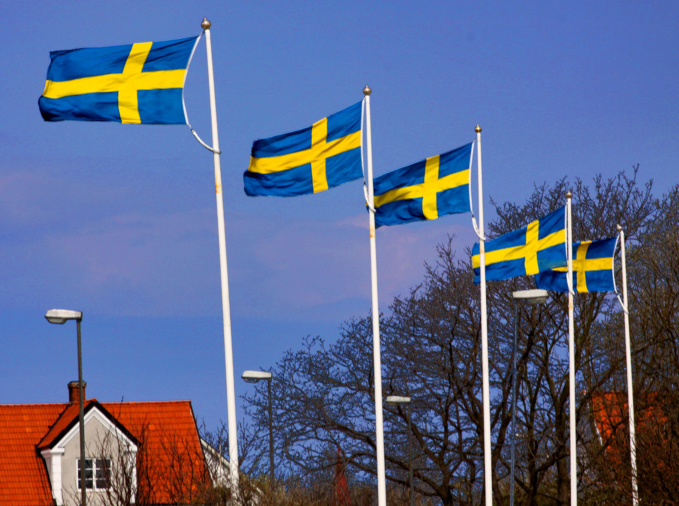
After what slowly became a real build-up to the decision, Sweden is opting for a last-minute turn-around. Cash-killing supporters around the world are much disappointed with the change of heart, as Sweden was expected to be the champion and testing ground for the socio-economic experiment.     <div style="position:relative; text-align : center; padding-bottom: 1em;">
      <img src="https://www.thestrategist.media/photo/art/default/11203669-18620325.jpg?v=1487349860" alt="Sweden to say "no" to a cashless society, in the end." title="Sweden to say "no" to a cashless society, in the end." />
     </div>
     <div>
      Over recent years, cash in all Scandinavian countries has been on the <a class="link" href="http://www.nbcnews.com/news/world/sweden-sees-shift-away-cash-n510256">path to slow demise</a>. New technologies, including smartphone payment solutions gradually nibbled the market share for hard currency. And given the low crime-rates in Scandinavian countries, <a class="link" href="http://qz.com/525111/sweden-is-on-its-way-to-becoming-the-first-cashless-society-on-earth/">cash is quickly associated</a>  with misdemeanors, to say the least. There have been cases, in recent years, where people trying to make purchase in cash were reported to the police, with the suspicion of criminal activity. <br />   <br />  Then banks <a class="link" href="http://www.nytimes.com/2015/12/27/business/international/in-sweden-a-cash-free-future-nears.html?_r=0">started wondering</a>  what a world without cash would be like. After a mere glance at their profit sheets, they quickly realized that cash segments were nowhere near the most profitable. Cash is a pain to handle, distribute, manage, protect and store. ATMs require maintenance technicians (just as electronic payment systems!), and clerks need time and machines to count cash, all of which costs money. Of course, virtual money has costs of its own, but stand no comparison with hard cash. Comparatively, virtual money running on servers is more efficient, economically at least. So, they quickly started pushing for the <a class="link" href="https://www.litterareport.com/story/The_Disappearance_of_Cash">outing of cash</a>  from their economy. <br />   <br />  Only then did the States jump in. States are in charge of producing the actual notes and coins, which comes at an <a class="link" href="https://www.federalreserve.gov/faqs/currency_12771.htm">obvious cost</a>. Because Sweden is not in the Euro zone, it has to design, produce and distribute its own currency. Given the technology contained in notes, that cannot be cheap. And once the currency has been distributed to the public, it gets torn, lost, stolen, forged and eventually laundered. All the more expense costs for the state. In addition, killing cash is supposed to reinforce State authority and ability to <a class="link" href="http://www.computerweekly.com/news/4500271520/Could-Sweden-become-the-first-cashless-society">fight crime</a>. <br />   <br />  The first hamper on the move was social justice: this would have made life somewhat simpler and higher-tech for most, but left the most vulnerable out of the gig. Tech Insider noted, in its June 14 <a class="link" href="http://www.techinsider.io/sweden-wants-to-kill-cash-within-5-years-2016-6">article</a>  : “<em>The trend has its downsides. In addition to burdening people who don't keep up with new technology (like the elderly and some rural citizens), a cashless society is also more vulnerable to electronic fraud. In 2014, the number of fraud cases rose to 140,000 — more than double the amount from a decade ago, Sweden's Ministry of Justice reports. Critics of a cashless system fear even greater surges as payments move online.”.</em> PRO (the national pensioners fund) added, <em>“PRO welcomes digital development, but you cannot leave a group behind,” </em>she said<em>. “We do not accept that certain groups are excluded from the payment market. There are still situations in which there are no alternatives to cash.”</em> <br />   <br />  The <a class="link" href="http://www.newsonia.com/reader/report/the-cashless-society-why-danish-citizens-should-be-worried-about-war/">question of civil liberties</a>  was quite central to the turn-around motion, although it was left much unaddressed. The Swedes are very attached to their democratic freedom, and realized that, without cash, they would be under complete control of the banks and the state. Strangely, though they do not favor cash in their daily use, hard currency revealed itself as something they want to keep, if only to keep the option for a rainy day.&nbsp; <br />   <br />  Two fundamental subjects rise, in such a debate: ability and time. It isn’t because some Swedes find cash less practical in their everyday operations that they don’t want the ability to use it. In recent years, payment methods multiplied adding old fashioned checks and wire transfers to Paypal and contact-free debit cards. Each time, liberty increased for the users. They no longer had to have a checkbook handy, or wait for opening hours at the bank, or have an active internet connection, their smartphones increased their ability to make payments whenever and wherever. And countries as democratic as Sweden like to see their liberties increased, <a class="link" href="http://www.moonproject.co.uk/denmark-everything-but-the-cash/">not decreased</a>. <br />   <br />  At the bottom line, killing cash in one (very handy) option to make payments, and killing it amounts to limiting economic freedom. The second parameter is time: true, the current Swedish government is respectful of civil and fundamental liberties. But governments change, and new ones inherit the powers of the old ones. So if a country were to give exceptionally large powers to its government, such as total economic power and control, it may well be that the government in place will make proper and sensible use of this power. But what happens when the next government, a little less hell-bent on democratic liberties, comes into power? How can one be sure the same appropriate use will be made of these powers? In Sweden, as in many other European states, the <a class="link" href="http://www.nytimes.com/interactive/2016/world/europe/europe-far-right-political-parties-listy.html">threat of a far-right electoral victory</a>  looms almost every year. Citizens best not be short-sighted… <br />   <br />  This may have flown way above the head of many, but a fundamental right has just been saved from oblivion in the kingdom of Sweden. Whether police agencies like it or not, whether governments like it or not, and whether even the people like it or not, liberties are measured in the number of things we may or may not do, of our own initiative, without answering to someone just after. And because economies are a major pillar of our societies, that includes buying things.&nbsp;&nbsp;
     </div>
     <br style="clear:both;"/>
    ]]>
   </content>
   <link rel="alternate" href="https://www.thestrategist.media/Sweden-to-say-no-to-a-cashless-society-in-the-end_a1968.html" />
  </entry>
  <entry>
   <title>“Cash-free banks” in a cashless society are no joke</title>
   <updated>2018-11-07T12:05:00+01:00</updated>
   <id>https://www.thestrategist.media/Cash-free-banks-in-a-cashless-society-are-no-joke_a1320.html</id>
   <category term="World &amp; Politics" />
   <photo:imgsrc>https://www.thestrategist.media/photo/art/imagette/9264715-14794697.jpg</photo:imgsrc>
   <published>2016-04-05T15:41:00+02:00</published>
   <author><name>The Strategist</name></author>
   <content type="html">
    <![CDATA[
In Stockholm, you can pay a street hawker with a credit card; in Copenhagen you can buy a single shot espresso with a smartphone; in Helsinki, you can go grocery shopping without a wallet… Yet while this futuristic utopia and cashless society may benefit financial institutions and big businesses, customers won’t be included in that.     <div style="position:relative; float:left; padding-right: 1ex;">
      <img src="https://www.thestrategist.media/photo/art/default/9264715-14794697.jpg?v=1459950831" alt="“Cash-free banks” in a cashless society are no joke" title="“Cash-free banks” in a cashless society are no joke" />
     </div>
     <div>
      Scandinavia is slowly becoming the first cashless region in the world. Denmark is even considering taking a step further by allowing retailers to completely ban cash from their stores. <br />   <br />  In Sweden, banks are pushing the Government to take action to become the first fully cash-free country. At more than half of the country’s largest bank branches, including SEB, Swedbank, Nordea Bank among others, no cash is kept on hand, nor are cash deposit accepted. The banks are surely saving a significant amount on security, having eliminated physical cash to guard. However, customers now feel the impact of this major change. <br />   <br />  In 2010, Swedish banks held around 8.7 billion krona in notes and coins, and today it’s around 3 billion. A Swedish bank consortium controls most of the cash machines in the country and they are now dismantling hundreds of them. Banks may be saving on this as well, but customers in rural areas now have to go further into the city in order to access basic services, and many customers are already stepping out to ask the Government not to give more power to the banks. <br />   <br />  A cashless society may seem like a good idea on paper, however if it benefits the banks, which are more protected from physical robberies and thus allowed to cut costs, it doesn’t even so protect customers and banks from virtual fraud and security risks. The most recent figures from the ECB (1) show that fraudulent use of bank cards is racking up billions in costs for unlucky consumers. Total card fraud in Europe hit €1.3 billion ($1.4 billion) in 2012, a near 15 percent jump the year earlier. In other words, customers are increasingly at risk, as they might get hit directly with the consequences of digital fraud. <br />   <br />  It’s therefore no wonder that banks are pushing for a cashless society, but it’s a very dangerous bet for all of us. Many other countries already refuse to transition towards a cashless society for several reasons. <br />   <br />  For example, Germans place a high value on protecting their identities, privacy and data security. That’s the reason why most of them still refuse to transition to a cash-free society. Most Germans always carry some cash with them. The Deutschmark was a source of pride for their people, and today even if the Euro has replaced it, it has only increased Germans’ use of cash. <br />   <br />  For historical reasons, many Germans and Europeans worry about the fact that their digital transactions could be monitored. Some tend to argue that cash-free transactions may be practical, but really they’re mostly favored by banks as a way of cutting costs while boosting profits. <br />   <br />  Throughout Europe, most countries stand by the liberty of giving the customer the choice to use whatever means of payment they want. Yet, the Danish Government’s proposals go against this right, giving gas stations, clothing stores and restaurants the option to stop taking cash payment. For many, this would slow down the economy instead of boosting it. <br />   <br />  According to the former finance minister, Bjarne Corydon, the fact that Danish companies are still required to accept cash payments <em>“involves considerable administrative and financial burdens.”</em> Yet, the proposal of a cashless country didn’t come from a consumers’ group, nor a business owners’ association, but from the banks themselves. It is merely hard to envision this change as positive for the average customer and business owner. <br />   <br />  Danish Chamber of Commerce chief executive Jens Karskov publicly declared that <em>“Cashless environments will make it possible to test new innovative store concepts and payment without having to incorporate the very cost-intensive measures are required when handling cash”</em> (2). <br />   <br />  But customers already expressed their concerns and vowed to make the government change its view on the issue, fearing that older age groups would change their consumption habits because they are so used to using cash. <br />   <br />  <em>“The plan to eliminate cash payments from retailers and restaurants will no doubt raise concerns over possible restrictions of consumer access to necessary goods such as food and gas, as well as to risks of increased electronic fraud, but Denmark and other Nordic countries have already signaled they intend to lead the shift toward cashless economies, even if they have to push consumers along with them,”</em> wrote Shelly Banjo, journalist in <em>Quartz</em> (3). <br />   <br />  There are many reasons why customers are angry at this reform (4) that seems to have been planned without them even knowing about it. Most of them are still attached to banknotes and coins for what it means, historically, it has always been a source of pride and national unity. When holding cash you hold part of your country’s history, and it goes the same when traveling abroad. Look at how e-books were supposed to completely overtake printed versions… It never happened and most likely won’t because even if the book is the same, the feeling isn’t and customers, beyond being used to it, prefer it over electronic. <br />   <br />  Not leaving customers the freedom to choose their form of payment represents a great threat to democracy in many countries. The near future will reveal whether Denmark and other Scandinavian countries truly feel that threat and whether they will reconsider supporting an utopian cashless future. <br />  &nbsp;  <ol>  	<li class="list"><em>European Central Bank</em></li>  	<li class="list"><em>Denmark hopes to boost its economy by eliminating cash</em>, Shelly Banjo, Quartz, May 6th 2015</li>  	<li class="list"><em>This country is trying to go cash-free</em>, CNBC, Kalyeena Makortoff, May 15th 2015</li>  	<li class="list"><em>The empty&nbsp;promises of a cashless society,&nbsp;</em>Dominic Reed, <a class="link" href="http://www.broowaha.com/articles/25216/the-empty-promises-of-a-cashless-society" target="_blank">Broowaha</a>, March 28th 2016</li>  </ol>  
     </div>
     <br style="clear:both;"/>
    ]]>
   </content>
   <link rel="alternate" href="https://www.thestrategist.media/Cash-free-banks-in-a-cashless-society-are-no-joke_a1320.html" />
  </entry>
</feed>