<?xml version="1.0" encoding="UTF-8"?>
<feed xmlns="http://www.w3.org/2005/Atom"  xmlns:media="http://search.yahoo.com/mrss/" xmlns:dc="http://purl.org/dc/elements/1.1/" xmlns:itunes="http://www.itunes.com/dtds/podcast-1.0.dtd" xmlns:geo="http://www.w3.org/2003/01/geo/wgs84_pos#" xmlns:georss="http://www.georss.org/georss" xmlns:photo="http://www.pheed.com/pheed/">
 <title>The Strategist</title>
 <subtitle><![CDATA[Daily news and analysis for corporate &amp; political leaders]]></subtitle>
 <link rel="alternate" type="text/html" href="https://www.thestrategist.media" />
 <link rel="self" type="text/xml" href="https://www.thestrategist.media/xml/atom.xml" />
 <id>https://www.thestrategist.media/</id>
 <updated>2026-07-17T03:36:39+02:00</updated>
 <generator uri="http://www.wmaker.net">Webzine Maker</generator>
  <icon>https://www.thestrategist.media/favicon.ico</icon>
  <logo>https://www.thestrategist.media/var/style/logo.jpg?v=1426090212</logo>
  <entry>
   <title>Turkey and the U.S aim for creating a zone free of Islamic State fighters</title>
   <updated>2015-07-28T12:34:00+02:00</updated>
   <id>https://www.thestrategist.media/Turkey-and-the-U-S-aim-for-creating-a-zone-free-of-Islamic-State-fighters_a775.html</id>
   <category term="World &amp; Politics" />
   <photo:imgsrc>https://www.thestrategist.media/photo/art/imagette/8074056-12582481.jpg</photo:imgsrc>
   <published>2015-07-28T12:32:00+02:00</published>
   <author><name>The Strategist</name></author>
   <content type="html">
    <![CDATA[
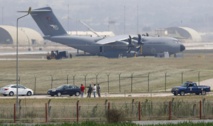
Turkey, a NATO member, has finally seen the light of the day and has agreed to join the U.S led coalition against terrorist organisations. However, the dynamics of the situation is complex with each player having its own agenda.     <div style="position:relative; float:left; padding-right: 1ex;">
      <img src="https://www.thestrategist.media/photo/art/default/8074056-12582481.jpg?v=1438079676" alt="Turkey and the U.S aim for creating a zone free of Islamic State fighters" title="Turkey and the U.S aim for creating a zone free of Islamic State fighters" />
     </div>
     <div>
      <div style="text-align: justify;">The United States and Turkey have joined forces to provide a strategic air cover for Syrian rebels who are fighting to keep those loose bandits of the Islamic State at bay from a strip of land bordering Turkey. This will not only bolster security for NATO members but also provide a safe haven for civilians in that area. <br />  &nbsp; <br />  Despite the barbarity the Islamic State has let loose, Turkey has been so far obstinate in joining the fight against this evil until now. Last week, it made a dramatic turnaround and has granted the coalition, led by the United States, access to its bases. It has also allowed the alliance to bombard targets in Syria which have been intrinsically linked to the jihadists. <br />  &nbsp; <br />  One of the reasons for its obstinacy to join the alliance has been its burden of sheltering 1.8 million Syrian refugees. It has since long campaigned for a “no fly zone” in northern Syria so as to keep Kurdish militants as well as fighters from the Islamic State away from its borders, so that it can deal with the tide of displayed civilians. <br />  &nbsp; <br />  Although no such formality has seen the light of day, the two allies have at least seen the need to provide air cover for moderate Syrian rebels who are fighting the Islamic State. <br />  &nbsp; <br />  "What we have now is air coverage to clear a region from Daesh (Islamic State) and support the moderate opposition so they can gain control of that region," said Davutoglu in an interview broadcast live on Turkish television. <br />  &nbsp; <br />  "We do not want to see Daesh on Turkey's borders." <br />  &nbsp; <br />  U.S officials in Washington were discussing the modalities regarding the scope and the size of the zone which would allow the Syrian rebels to operate freely. They have however ruled out the creation of a formal no-fly zone and have said that the plan was not aimed at creating a "safe zone" for Syrian refugees. <br />  &nbsp; <br />  “The purpose of the operation is not to create a safe zone into which Syrian refugees will go," said a senor official from the Obama administration, speaking on condition of anonymity. <br />  &nbsp; <br />  "They might go, but that’s not the purpose of the operation. The purpose of the operation is to clear the border and close the border to Daesh,” said the official. <br />  &nbsp; <br />  Meanwhile, Turkey, a member of NATO, is expected to brief its allies on the measures it taking to create this zone. However, as per two people with knowledge of the discussion, it did not request any air or troop support during preparations for the meeting. <br />  &nbsp; <br />  "Turkey has a very strong army and very strong security forces so there has been no request for any substantial NATO military support," said General Jens Stoltenberg, NATO Secretary, to the BBC. <br />  &nbsp; <br />  On its part, Turkey has launched night strikes on Kurdish insurgents camps in Iraq in what it called a "full-fledged battle against all terrorist organizations". However, this renewed military campaign against the Kurdistan Workers Party (PKK), with which it has battled for three decades has raised suspicionsthat Turkey’s real agenda is to check Kurdish territorial ambitions rather than fighting the hooligans of the Islamic States. <br />  &nbsp; <br />  <strong>Source:</strong><strong> Reuters</strong></div>  
     </div>
     <br style="clear:both;"/>
    ]]>
   </content>
   <link rel="alternate" href="https://www.thestrategist.media/Turkey-and-the-U-S-aim-for-creating-a-zone-free-of-Islamic-State-fighters_a775.html" />
  </entry>
  <entry>
   <title>Islamic State gaining local support in Gulf Arab States.</title>
   <updated>2015-07-03T05:48:00+02:00</updated>
   <id>https://www.thestrategist.media/Islamic-State-gaining-local-support-in-Gulf-Arab-States_a686.html</id>
   <category term="World &amp; Politics" />
   <photo:imgsrc>https://www.thestrategist.media/photo/art/imagette/7979474-12413031.jpg</photo:imgsrc>
   <published>2015-07-03T05:46:00+02:00</published>
   <author><name>The Strategist</name></author>
   <content type="html">
    <![CDATA[
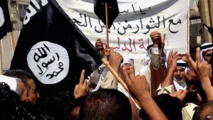
With VISA free travel in between Gulf States, officials worry that the local bombing could be used a model for other wannabe suicide bombers.     <div style="position:relative; float:left; padding-right: 1ex;">
      <img src="https://www.thestrategist.media/photo/art/default/7979474-12413031.jpg?v=1435895287" alt="Islamic State gaining local support in Gulf Arab States." title="Islamic State gaining local support in Gulf Arab States." />
     </div>
     <div>
      When a wanna-be Saudi Arabian suicide bomber flew in to Kuwait to carry out one of the worst militant attacks on innocent and disarmed civiliants, sympathisers to the Islamic State had made preparations such that a driver and car to pick him up and take him to the designated target, Kuwaiti-styled robes, a bomb vest, a safe house to stay and prepare, were all waiting for him. As per a security source, the Islamic State appears to now have a network of sympathisers, militants and propagandists, on the Arab peninsula. <br />  &nbsp; <br />  The Kuwaiti media and a security source have reported that Fahd Suliman Abdul-Muhsen al-Qabaa got in touch with a family member who had ties with the Islamic State. He also got in touch with others who were previously linked to Al Qaeda in Kuwait. <br />  &nbsp; <br />  As per CCTV camera footage, the young suicide bomber, was recorded entering the Imam al-Sadeq mosque. His figure, in the CCTV recordings, appeared bloated since he was wearing a vest fitted with bombs. The Imam al-Sadeq mosque was then housing around 2,000 Shi’ite men all prostrated in prayer. The suicide bomber examined the praying men then detonated the bomb. <br />  &nbsp; <br />  The timing of his entry into the mosque was such that few were in a position to ask any intrusive questions. The attention to detail looks to be pretty high for the team that coordinated and facilitated this attack. <br />  &nbsp; <br />  This dastardly act killed 27 worshippers and is one of the deadliest and lethal militant attacks that Kuwait has witnessed since the bombings in Riyadh that killed 35 people, at the start of an Al Qaeda campaign, way back in May 2003. <br />  &nbsp; <br />  This attack has raised important questions about the number of Saudi men will to travel and attack Shi’ites in other Gulf Arab States and make good on a threat proclaimed by the Islamic State wherein they had proclaimed that violence will increase during the holy month of Ramadan. <br />  &nbsp; <br />  This is a cause for worry for officials since other suicide bombers could follow this model wherein young men radicalised by Islamists fly to neighbouring states without prior visa, since Gulf Arab states allow free travel between between themselves, contact local militant cells and work in a coordinated manner. <br />  &nbsp; <br />  <strong>References:</strong> <br />  <a class="link" href="http://www.reuters.com/article/2015/07/01/us-kuwait-blast-plot-insight-idUSKCN0PB55420150701"><strong>http://www.reuters.com/article/2015/07/01/us-kuwait-blast-plot-insight-idUSKCN0PB55420150701</strong></a> 
     </div>
     <br style="clear:both;"/>
    ]]>
   </content>
   <link rel="alternate" href="https://www.thestrategist.media/Islamic-State-gaining-local-support-in-Gulf-Arab-States_a686.html" />
  </entry>
  <entry>
   <title>The ISIS Crisis</title>
   <updated>2015-06-01T12:23:00+02:00</updated>
   <id>https://www.thestrategist.media/The-ISIS-Crisis_a516.html</id>
   <category term="World &amp; Politics" />
   <photo:imgsrc>https://www.thestrategist.media/photo/art/imagette/7855366-12191376.jpg</photo:imgsrc>
   <published>2015-06-01T11:58:00+02:00</published>
   <author><name>The Strategist</name></author>
   <content type="html">
    <![CDATA[
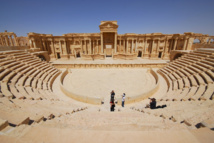
Islamic State seized full control of the memorable city of Palmyra in focal Syria on Thursday, following the day of seizure, it caught a common capital in neighboring Iraq, recommending energy is building for the ultra-hardline gathering. The twin triumphs heap weight on Damascus and Baghdad, as well as toss uncertainty on U.S. system to depend solely on air strikes to annihilate the Sunni Muslim development, which is a branch of al Qaeda.     <div style="position:relative; float:left; padding-right: 1ex;">
      <img src="https://www.thestrategist.media/photo/art/default/7855366-12191376.jpg?v=1433154205" alt="The ISIS Crisis" title="The ISIS Crisis" />
     </div>
     <div>
      <div style="text-align: justify;">Thestrategist.media – 21 May 2015 – Sylvia Westall informs that the Britain-based Syrian Observatory for Human Rights reporting said that Islamic State now controls more than 50% of Syrian domain taking after four years of common war. <br />  &nbsp; <br />  The radical gathering has annihilated ancient pieces and landmarks in Iraq and there are reasons for alarm as ISIS may now destroy Palmyra, an antiquated World Heritage site and home to famous Roman-time vestiges including very much protected sanctuaries, corridors and a theater. <br />  &nbsp; <br />  Conflicts in the range subsequent to Wednesday killed no less than 100 professional government contenders, said Rami Abdulrahman, leader of the Syrian Observatory for Human Rights, which constructs its data with respect to a system of sources on the ground. Islamic State said withdrawing ace government strengths had abandoned some dead, yet gave no exact figures. <br />  &nbsp; <br />  The attack on the city is a piece of a westbound progress by Islamic State that is including to weights Assad's overstretched armed force and ace government state army, which have likewise as of late lost ground in the northwest and south. <br />  &nbsp; <br />  &nbsp; <br />  Palmyra's fall came only five days after the Islamist gathering seized Ramadi, capital of Iraq's biggest region, Anbar. Contenders faithful to the gathering have likewise solidified their grasp on Sirte in Libya, main residence of previous pioneer Muammar Gaddafi, developing their achieve in the locale. <br />  &nbsp; <br />  <strong>COUNTER-OFFENSIVE </strong> <br />  Iraqi powers said on Thursday that they had upset a third endeavor by Islamic State activists to achievement their protective lines east of Ramadi overnight. <br />  &nbsp; <br />  Police and star government Sunni contenders traded mortar and expert rifleman shoot with guerillas over the new bleeding edge in Husaiba al-Sharqiya, about somewhere between Ramadi and a base where a counter-hostile to retake the city is being arranged. <br />  &nbsp; <br />  The loss of Ramadi gave the focal Iraq government in Baghdad its most huge setback in a year and uncovered the impediments of both the Iraqi armed force and a crusade of U.S.-drove air strikes intended to "debase and pulverize" Islamic State. <br />  &nbsp; <br />  The United States arrangements to convey 1,000 against tank weapons to Iraq in June to battle suicide bombings like those that helped the Islamist gathering get Ramadi, a senior U.S. State Department authority said on Thursday. <br />  &nbsp; <br />  Iraq's administration has requested Shi'ite local army, some of which have close binds to Iran, to join the fight to retake Ramadi, raising apprehensions of recharged partisan strife in the nation. <br />  &nbsp; <br />  Washington has said it will bolster the Ramadi counter-hostile, however says it ought to incorporate both Sunni and Shi'ite compels under the immediate order of focal government. <br />  &nbsp; <br />  The aggressors in Ramadi are looking to combine their additions in the encompassing region of Anbar by pushing east towards the Habbaniya base where Iraqi security powers and Shi'ite paramilitaries are massing. <br />  &nbsp; <br />  "Daesh is frantically attempting to break our resistances yet this is unthinkable now," Police major Khalid al-Fahdawi said, alluding to Islamic State. "They attempted overnight to rupture our barriers yet they fizzled. Armed force helicopters were sitting tight for them." <br />  &nbsp; <br />  Habbaniya is one of just a couple remaining pockets of government-held region in Anbar, and lies in the middle of Ramadi and the town of Falluja, which has been controlled by Islamic State for over a year. <br />  &nbsp; <br />  Nearby authorities say the aggressors need to sign up the two towns and overwhelm the other remaining government holdouts, unstable along the Euphrates waterway valley and the fringe with Jordan and Saudi Arabia. <br />  &nbsp; <br />  Sabah Nouri, representative for Iraq's counterterrorism strengths, said powers were "streaming to Habbaniya with new deadly arms that will help invert the blueprint against Daesh". <br />  &nbsp; <br />  He said the fortifications would permit the armed force to wage a few concurrent assaults, and that consistent troops would hold any recovered domain to permit the counter-terrorism units to concentrate on keeping up a hostile. <br />  &nbsp; <br />  Albeit Islamic State has seized vast lumps of Syria, the regions it holds are generally inadequately possessed. Syria's principle urban communities, including the capital Damascus, are situated on its western flank along the fringe with Lebanon and the coastline and have been the need for Assad's administration. <br />   <br />   <br />   <br />   <br />   <br />  <strong>References:</strong> <br />  <a class="link" href="http://www.reuters.com/article/2015/05/21/us-mideast-crisis-syria-idUSKBN0O60KH20150521">http://www.reuters.com/article/2015/05/21/us-mideast-crisis-syria-idUSKBN0O60KH20150521</a> </div>  
     </div>
     <br style="clear:both;"/>
    ]]>
   </content>
   <link rel="alternate" href="https://www.thestrategist.media/The-ISIS-Crisis_a516.html" />
  </entry>
</feed>