<?xml version="1.0" encoding="UTF-8"?>
<feed xmlns="http://www.w3.org/2005/Atom"  xmlns:media="http://search.yahoo.com/mrss/" xmlns:dc="http://purl.org/dc/elements/1.1/" xmlns:itunes="http://www.itunes.com/dtds/podcast-1.0.dtd" xmlns:geo="http://www.w3.org/2003/01/geo/wgs84_pos#" xmlns:georss="http://www.georss.org/georss" xmlns:photo="http://www.pheed.com/pheed/">
 <title>The Strategist</title>
 <subtitle><![CDATA[Daily news and analysis for corporate &amp; political leaders]]></subtitle>
 <link rel="alternate" type="text/html" href="https://www.thestrategist.media" />
 <link rel="self" type="text/xml" href="https://www.thestrategist.media/xml/atom.xml" />
 <id>https://www.thestrategist.media/</id>
 <updated>2026-06-18T03:42:34+02:00</updated>
 <generator uri="http://www.wmaker.net">Webzine Maker</generator>
  <icon>https://www.thestrategist.media/favicon.ico</icon>
  <logo>https://www.thestrategist.media/var/style/logo.jpg?v=1426090212</logo>
  <entry>
   <title>What is Alexis Tsipras strategy so as to extract maximum mileage out of the Greek Financial Crisis?</title>
   <updated>2015-07-08T13:52:00+02:00</updated>
   <id>https://www.thestrategist.media/What-is-Alexis-Tsipras-strategy-so-as-to-extract-maximum-mileage-out-of-the-Greek-Financial-Crisis_a703.html</id>
   <category term="World &amp; Politics" />
   <photo:imgsrc>https://www.thestrategist.media/photo/art/imagette/8000186-12449448.jpg</photo:imgsrc>
   <published>2015-07-08T13:49:00+02:00</published>
   <author><name>The Strategist</name></author>
   <content type="html">
    <![CDATA[
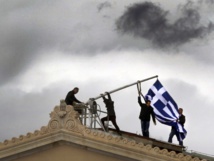
While Alexis Tsipras and his finance minister turned up at an emergency meeting without any written proposals for reform, a senior EU official thinks that this is probably a strategy to gauge the mood of its creditors. On his part Tsipras seemed pretty clear: although he knows reforms will invariably be painful, for which he needs to move fast, so as to stop any possible revolt against it.     <div style="position:relative; float:left; padding-right: 1ex;">
      <img src="https://www.thestrategist.media/photo/art/default/8000186-12449448.jpg?v=1436356342" alt="What is Alexis Tsipras strategy so as to extract maximum mileage out of the Greek Financial Crisis?" title="What is Alexis Tsipras strategy so as to extract maximum mileage out of the Greek Financial Crisis?" />
     </div>
     <div>
      Although Greeks have voted for an emphatic ‘No’ in its recent referendum, Alexis Tsipras, Greek’s embattled Prime Minister, who has to run the country, pleaded to members of the European Parliament for a fair deal that will keep his country in the Eurozone. On their part, leaders from the EU have given him 5 days to come with suggestions for financial reform. <br />  &nbsp; <br />  All banks in Greece have shut their doors, cash withdrawals through ATMS have been rationed. Greece has never ever been this close to bankruptcy. With its economy in a freefall, unless the country can take a quick step and streamline its handling of the economy through financial reforms, it will most likely exit the European Union. <br />  &nbsp; <br />  The leftist Premier though appeared cool and relaxed amidst scattered boos and cheers when he made an appearance in the European Parliament. He feels that Greece has no other choice but to demand a way out “this impasse” <br />  &nbsp; <br />  "We are determined not to have a clash with Europe but to tackle head on the establishment in our own country and to change the mindset which will take us and the euro zone down," he said, to which leftist parties promptly applauded. <br />  &nbsp; <br />  He also promised to provide an effective and a detailed reform proposal within 2 days while criticizing and venting anger at his European partners who he said were “terrorize” the Greeks into "never-ending austerity". <br />  &nbsp; <br />  Donald Tusk, the President of the European Council, reminded the leftist Premier, who was before him, that the final deadline for convincing reform plans and their prompt implementation was this week. <br />  &nbsp; <br />  "Our inability to find an agreement may lead to the bankruptcy of Greece and the insolvency of its banking system," Tusk said plainly. "And for sure it will be most painful for the Greek people. I have no doubt that this will affect Europe, also in the geopolitical sense. If someone has any illusion that it will not, they are naive," he said. <br />  &nbsp; <br />  In wednesday’s second emergency meeting a scheduled timetable was drawn up and it was decided that Greece will formally submit a proposal for a medium term loan to the European Stability Mechanism bailout fund and thereby kickstart the reform program, the exact mechanism of which is scheduled to be detailed on Thursday, 09-07-2015. <br />  &nbsp; <br />  If the proposals set by Greece are doable and agreeable to the IMF, European Central Bank and the European Commission, then finance ministers from the Eurozone would schedule a meeting on Saturday to recommend opening of negotiations with Greece. If all went according to plan, the European Union’s parliament would meet on Sunday to formally approve an aid plan.  <h3>&nbsp;</h3>  Eurozone sources however confirmed that before this is done, as a first step, Greece should first usher in basic reforms through its own parliament. Unless it does so, no offer of aid will be on the table. However, if Greece is serious on its part and agrees to this first step, Angela Merkel, the German Chancellor will also request her parliament in Berlin to authorize opening of negotiations to keep Greek’s financial sector afloat. <br />  &nbsp; <br />  &nbsp; <br />  <strong>References:</strong> <br />  <a class="link" href="http://www.reuters.com/article/2015/07/08/us-eurozone-greece-idUSKBN0P40EO20150708"><strong>http://www.reuters.com/article/2015/07/08/us-eurozone-greece-idUSKBN0P40EO20150708</strong></a> 
     </div>
     <br style="clear:both;"/>
    ]]>
   </content>
   <link rel="alternate" href="https://www.thestrategist.media/What-is-Alexis-Tsipras-strategy-so-as-to-extract-maximum-mileage-out-of-the-Greek-Financial-Crisis_a703.html" />
  </entry>
  <entry>
   <title>A Greek economic tragedy of Shakespearean proportions</title>
   <updated>2015-07-03T07:06:00+02:00</updated>
   <id>https://www.thestrategist.media/A-Greek-economic-tragedy-of-Shakespearean-proportions_a688.html</id>
   <category term="Management &amp; Strategy" />
   <photo:imgsrc>https://www.thestrategist.media/photo/art/imagette/7979615-12413304.jpg</photo:imgsrc>
   <published>2015-07-03T07:04:00+02:00</published>
   <author><name>The Strategist</name></author>
   <content type="html">
    <![CDATA[
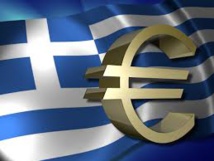
The Greek financial crisis has more elements in play than just money. What is at stake is the age old concept of benefit of the one vs the many.     <div style="position:relative; float:left; padding-right: 1ex;">
      <img src="https://www.thestrategist.media/photo/art/default/7979615-12413304.jpg?v=1435899979" alt="A Greek economic tragedy of Shakespearean proportions" title="A Greek economic tragedy of Shakespearean proportions" />
     </div>
     <div>
      <div style="text-align: justify;">In a small room with a rather plain looking wooden table sat the Alexis Tsipras, the Greek Prime Minister, along with Angela Merkel, the German Chancellor and Francois Hollande, the French President and a other officials. These key players were trying to avert a financial meltdown that is threatening Greece, the Euro as well as the European Union. <br />  &nbsp; <br />  So as to avoid a bankrupt Greece, the German Chancellor and the French President made their final offer of a few billions Euros in aid provided Tsipras changes his economic course and brings in financial reforms demanded by Greek’s creditors. <br />  &nbsp; <br />  According to Greek sources party to the negotiations, the meeting was a short one. This Greek economic tragedy had been dragging on for a while now and the participant’s body language looked stiff, their look – tired. Tsipras broke the tension by deciding to close the negotiations and head for an emergency meeting with his cabinet. Even as he negotiated with his two colleagues, he wanted the citizens of the Greek nation to decide their own fate, for he and his cabinet colleagues were unable to come to terms with Greek’s creditors. <br />  &nbsp; <br />  As he flew back to Athens that very day, as per Greek officials, he along with his cabinet decided to take Greece on the referendum road. An election would be too long drawn, but a referendum, he surmised could be barometer for the will of the Greek people. This decision was announced on television late at night and shortly before doing so, Hollande and Merkel were informed by telephone. <br />  &nbsp; <br />  What is at stake is more than just money, for this Greek economic tragedy tests the very cord that binds nations to the European Union. While for Greece it is for its sovereignty, for the European Union it is a litmus test of its unity, of whether the 19 nation single currency bloc can stick together for the greater good and make its nations meet agreed rules for economic standards. <br />  &nbsp; <br />  Greek’s call for referendum certainly did not go down well with finance minister from the Eurogroup. They along with the International Monetary Fund (IMF) had earlier rescued Greece from its fiscal liabilities with a gigantic bailout program. Greece was scheduled to payback Euro 1.6 billion by the end of June. But it could not, thus the crisis. <br />  &nbsp; <br />  With Tsipras taking the referendum route, the Eurogroup’s patience for economic reform for Greek came to a grinding halt. The European Central Bank (ECB) which was keeping Greek banks afloat with Euro 89 billion decided that enough was enough, Greece’s emergency funding had to stop. <br />  &nbsp; <br />  For citizens of Greece, fearful that their entire life’s saving would be wiped out in a single stroke, decided to queue up in front of ATMs and started to withdrawn their life’s saving. In order to control this crisis, Tsipras ordered that banks remain close and introduced capital controls. <br />  &nbsp; <br />  Greek’s referendum is scheduled to be held on the 5<sup>th</sup> of July, although there are rumours going around that it may be cancelled at the last minute. However, if it goes through, the citizens of Greece have a fateful choice to make: they could either go on their own and cut themselves off from the European Union or they could swallow the less bitter pill of economic reforms and have a brighter future with the European Union. For their part, European leaders have made it clear, the decision to not enforce economic reforms amounts to quitting the Eurozone. Tsipras however, differs from this point of view, preferring to be part of the European Union and still have his way. <br />  &nbsp; <br />  Only the future will tell whether Greece can have the cake and eat it too. <br />   <br />  <strong>References:</strong> <br />  <a class="link" href="http://www.reuters.com/article/2015/07/01/us-eurozone-greece-negotiations-specialr-idUSKCN0PB4QK20150701"><strong>http://www.reuters.com/article/2015/07/01/us-eurozone-greece-negotiations-specialr-idUSKCN0PB4QK20150701</strong></a> </div>  
     </div>
     <br style="clear:both;"/>
    ]]>
   </content>
   <link rel="alternate" href="https://www.thestrategist.media/A-Greek-economic-tragedy-of-Shakespearean-proportions_a688.html" />
  </entry>
</feed>