<?xml version="1.0" encoding="UTF-8"?>
<feed xmlns="http://www.w3.org/2005/Atom"  xmlns:media="http://search.yahoo.com/mrss/" xmlns:dc="http://purl.org/dc/elements/1.1/" xmlns:itunes="http://www.itunes.com/dtds/podcast-1.0.dtd" xmlns:geo="http://www.w3.org/2003/01/geo/wgs84_pos#" xmlns:georss="http://www.georss.org/georss" xmlns:photo="http://www.pheed.com/pheed/">
 <title>The Strategist</title>
 <subtitle><![CDATA[Daily news and analysis for corporate &amp; political leaders]]></subtitle>
 <link rel="alternate" type="text/html" href="https://www.thestrategist.media" />
 <link rel="self" type="text/xml" href="https://www.thestrategist.media/xml/atom.xml" />
 <id>https://www.thestrategist.media/</id>
 <updated>2026-03-13T05:57:49+01:00</updated>
 <generator uri="http://www.wmaker.net">Webzine Maker</generator>
  <icon>https://www.thestrategist.media/favicon.ico</icon>
  <logo>https://www.thestrategist.media/var/style/logo.jpg?v=1426090212</logo>
  <entry>
   <title>FedEx order 50 Boeing 767s for $9.97 billion</title>
   <updated>2015-07-22T13:03:00+02:00</updated>
   <id>https://www.thestrategist.media/FedEx-order-50-Boeing-767s-for-9-97-billion_a755.html</id>
   <category term="Companies &amp; CEOs" />
   <photo:imgsrc>https://www.thestrategist.media/photo/art/imagette/8052304-12541990.jpg</photo:imgsrc>
   <published>2015-07-22T13:02:00+02:00</published>
   <author><name>The Strategist</name></author>
   <content type="html">
    <![CDATA[
Ever since the global economic crisis came about, cargo air traffic has been hit severely by a multitude of factors. However, with FedEx placing such a large order, it would seem that the economy is shaking and picking up once again.     <div style="position:relative; float:left; padding-right: 1ex;">
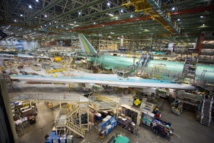
      <img src="https://www.thestrategist.media/photo/art/default/8052304-12541990.jpg?v=1437563030" alt="FedEx order 50 Boeing 767s for $9.97 billion" title="FedEx order 50 Boeing 767s for $9.97 billion" />
     </div>
     <div>
      <div style="text-align: justify;">FedEx Corp, the world’s largest cargo company, plans on buying 50 Boeing 767-300 cargo airplanes over the span of 10 years. For Boeing, this is the biggest ever offer it has received from a single party for the supply of aircraft. <br />  &nbsp; <br />  The deal with Boeing was announced in a statement put out by FedEx wherein an option for another 50 Boeing 76Fs is mentioned. The additional 50 planes will be worth $9.97 billion at current prices. <br />  &nbsp; <br />  FedEx has reported that the delivery of the aircrafts by Boeing will be spread over 6 years starting from 2018 to 2023. This is the latest drive by FedEx to upgrade and modernize its ageing aircrafts. <br />  &nbsp; <br />  "Acquiring additional 767F aircraft...will enable us to reduce structural costs, improve our fuel efficiency and enhance the reliability of our global network," said David J. Bronczek, president and chief executive officer of FedEx Express. <br />  &nbsp; <br />  Ever since the global financial crisis , the air cargo business has not really taken office compared to general aviation. Over capacity, competition and weak demands are just some of the reasons plaguing the industry, which in turn have reduced the need for dedicated cargo planes as well as profit margins. <br />  &nbsp; <br />  However, going by Boeing’s forecast, global air traffic will in fact increase by 4.7% and air traffic for cargo airplanes will double over the course of twenty years. <br />  &nbsp; <br />  As per information published on its website, as of 31<sup>st</sup> May 2015, FedEx has a freighter fleet strength of 641. In addition to the just placed order for capacity increase it has committed to purchasing 18 Boeing 777 freighters. <br />  &nbsp; <br />  On it part Boeing has been receiving a steady stream of orders. Taiwan’s EVA Air has also placed an order for 5 777 freighters worth $1.5 billion. <br />  &nbsp; <br />  With regard to the FedEx order, a Boeing spokesperson was pleased to say, "We appreciate the confidence that FedEx has shown in the 767.” <br />  &nbsp; <br />  These 767s will be replacing older freighters including the Boeing MD10s,&nbsp; MD11s, Airbus A300, Airbus 310 and Airbus 600 over the course of the coming years. <br />  &nbsp; <br />  Although Boeing has been steadily upgrading the passenger models of its aircrafts with next generation, fuel-efficient models, the freighter versions have not been upgraded. Interesting, the Boeing 767 is also the model used by the U.S Air Force as an air-to-air refueling tanker. The U.S Air Force plans on spending $52 billion so as to develop and buy 179 airplanes. <br />  &nbsp; <br />  <strong>References:</strong> <br />  <a class="link" href="http://www.reuters.com/article/2015/07/22/us-airline-fedex-orders-idUSKCN0PW04920150722"><strong>http://www.reuters.com/article/2015/07/22/us-airline-fedex-orders-idUSKCN0PW04920150722</strong></a> </div>  
     </div>
     <br style="clear:both;"/>
    ]]>
   </content>
   <link rel="alternate" href="https://www.thestrategist.media/FedEx-order-50-Boeing-767s-for-9-97-billion_a755.html" />
  </entry>
  <entry>
   <title>Clearing backlogs for Airbus and Boeing is a mammoth task</title>
   <updated>2015-07-17T09:21:00+02:00</updated>
   <id>https://www.thestrategist.media/Clearing-backlogs-for-Airbus-and-Boeing-is-a-mammoth-task_a739.html</id>
   <category term="Companies &amp; CEOs" />
   <photo:imgsrc>https://www.thestrategist.media/photo/art/imagette/8034350-12509178.jpg</photo:imgsrc>
   <published>2015-07-17T09:19:00+02:00</published>
   <author><name>The Strategist</name></author>
   <content type="html">
    <![CDATA[
Although the aerospace industry is riding a wave of increased orders, a smooth functioning of the supply chain management is increasingly becoming critical for its operations, delivery and profitability. Adding to this burden is the phasing out of old models and replacing them with newer more fuel efficient ones.     <div style="position:relative; float:left; padding-right: 1ex;">
      <img src="https://www.thestrategist.media/photo/art/default/8034350-12509178.jpg?v=1437117676" alt="Clearing backlogs for Airbus and Boeing is a mammoth task" title="Clearing backlogs for Airbus and Boeing is a mammoth task" />
     </div>
     <div>
      With the Paris air show underway, the movers and shakers of the world’s aerospace industry is busy flaunting its models on runways the way haute couture models parade on catwalks, Boeing and Airbus are excited and busy trying to outcompete each other and get more orders. Critics on the other hand are focusing on the happenings at the backstage. <br />  &nbsp; <br />  &nbsp; <br />  Both manufacturers have had a 3 year record of orders thanks to the booming aviation industry and to the introduction of increased fuel-efficient aircrafts. Although they have garnered a record number of orders they now have to put those figures into production lines and translate them into sales figures, without the traditional stumbling blocks of cost overruns. <br />  &nbsp; <br />  &nbsp; <br />  Together, the airlines have had bookings for close to 12,000 aircrafts which would typically represent 8-10 years of productions. That is a long time for any customer to wait. Manufacturers from China and Canada are lurking with their models, trying to snag customers from commercial passenger planes. The stakes are high despite the challenges. <br />  &nbsp; <br />  “The number one thing on our minds is delivery. We have to make sure our programmes deliver on time and on budget,” said Randy Tinseth, head of marketing for Boeing. <br />  &nbsp; <br />  &nbsp; <br />  Tom Williams, Airbus chief operating officer, says the European aircraft manufacturer has to “build a single-aisle aircraft about every six hours. It is a drum beat and intensity that is very demanding.” <br />  &nbsp; <br />  &nbsp; <br />  Both companies are set to increase the output from their production lines by a whopping 28% by 2018. Both have already boosted production rates for their most popular models - the Aribus 320 and the Boeing 737. The growing demand for air travel shows no signs of slowing down. <br />  &nbsp; <br />  &nbsp; <br />  Boeing’s ambitious plans have raised doubts whether its supply chain machinery is well oiled enough to take on the strain of increased production. Efforts are being made to ensure that the smallest suppliers have the resources to meet the increased demand in production. <br />  &nbsp; <br />  &nbsp; <br />  However, engine and aircraft manufacturers are demanding discounts which are acting as pressure points for smaller companies located at the bottom of the supply chain. This pressure could threaten the smooth function of the entire production line, since the delay in delivery of even the smallest component can in turn delay the delivery of the aircraft. <br />  &nbsp; <br />  &nbsp; <br />  As per Alix Partners, a consultancy firm, the supplier’s share of the overall profit of the industry has falled from 24% to 21%. The sharpest decline has been for those companies who contribute to the aircraft’s structure. <br />  &nbsp; <br />  &nbsp; <br />  The production challenge is not just about new aircraft models. Both giants, have the delicate task of keeping productions lines busy while transitioning from older to newer more fuel efficient and re-engined models. Airbus has already dropped hints that its A330 model will be replaced by the A330neo model in 2017. <br />  &nbsp; <br />  &nbsp; <br />  These orders are “particularly important because the company needs [them] soon to fill its planned production for 2016”, says Douglas Harned, aerospace analyst at Bernstein. <br />  <strong>References:</strong> <br />  <a class="link" href="http://www.ft.com/intl/cms/s/2/359fe216-0942-11e5-b643-00144feabdc0.html"><strong>http://www.ft.com/intl/cms/s/2/359fe216-0942-11e5-b643-00144feabdc0.html</strong></a> 
     </div>
     <br style="clear:both;"/>
    ]]>
   </content>
   <link rel="alternate" href="https://www.thestrategist.media/Clearing-backlogs-for-Airbus-and-Boeing-is-a-mammoth-task_a739.html" />
  </entry>
</feed>