

The American space observatory Swift, which a robotic satellite tried to save but failed, is scheduled to deorbit and disintegrate in the thick layers of Earth’s atmosphere this week, as reported by The Independent, referencing information from military sources and specialists.
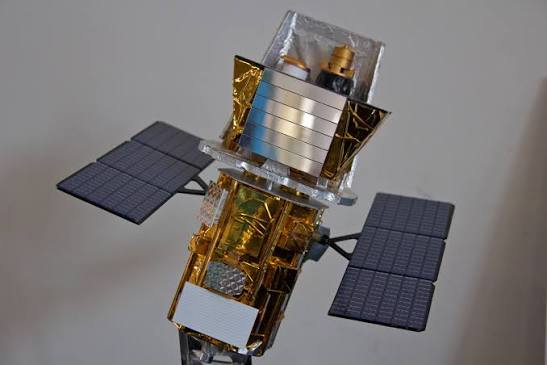
The U.S. Space Force anticipates that the vintage 1.5-ton NASA telescope, which was launched in 2004 to examine cosmic gamma-ray bursts, the strongest explosions in the universe, and supernovae, may re-enter the atmosphere on Friday, November 6.
Brad Cenko, the mission’s lead investigator at NASA, states that the majority of the Swift telescope will disintegrate during re-entry; nonetheless, pieces of its sturdier sections and some of its mirrors might endure the journey through the thick atmosphere.
The possible debris impact area encompasses regions of Africa, Australia, India, Southeast Asia, as well as Central and South America. However, as Cenko pointed out, even if any pieces were to come to the surface, they would probably fall into the ocean.
In July, NASA deployed a “tug” satellite named Link, designed to save the Swift observatory, which was quickly descending. The strategy involved the spacecraft meeting the telescope, attaching it with robotic arms, and slowly raising its orbit. Soon after takeoff, the tug encountered a malfunction in its attitude control system, leading the spacecraft to rotate and lose contact. Attempts to return it to its regular function, and, as a result, execute the rescue operation, did not succeed.
As reported by Space.com, even though the telescope persisted in monitoring gamma-ray bursts after an unsuccessful rescue effort, its orbit fell to an altitude of 275 km on October 20, a height where its control system could no longer counteract atmospheric drag, resulting in the conclusion of its operations. During its 22 years in orbit, the Swift spacecraft identified over 2,000 gamma-ray bursts and 1,400 supernovae.
source: independent.co.uk
